

If you live in the Phoenix metro area and you’ve ever tried to plan a backyard renovation while juggling HOA rules, 115°F heat, and a sea of paver options, you already know this isn’t a project you can wing. A landscape designer who understands Arizona’s desert climate, community guidelines, and hardscape materials can save you months of frustration and thousands in rework. This guide covers what Arizona landscape designers actually do, how they work within HOA frameworks, and why pavers and hardscape are central to outdoor living in this part of the country.
Key Takeaways
-
A landscape designer creates a detailed landscape plan for your outdoor space, including plants, pavers, and hardscape elements tailored to Arizona’s extreme climate and your community’s HOA requirements.
-
HOA-approved designs in Phoenix-area communities typically require submission of a conceptual plan, plant list, and material samples, with most reviews completed within 2–4 weeks.
-
Common Arizona design features include paver patios, travertine pool decks, limited turf areas, and low-water native plants that survive 110°F+ summers without excessive irrigation.
-
The professional landscape design process moves from initial consultation through site analysis, concept drawings, and a final scaled plan that landscape contractors can price and build from, often in collaboration with landscape architects for engineered elements.
-
Digital Vibes Agency is the Chandler-based marketing partner that helps Arizona landscape designers and hardscape companies attract more qualified local projects through SEO, web design, and paid advertising.
What Does an Arizona Landscape Designer Actually Do?
Think of a landscape designer as the master planner for your front yard and backyard, especially in hot, dry climates like Chandler, Gilbert, and greater Phoenix. They’re the person who takes a blank or neglected yard and turns it into a functional outdoor space that works with Arizona’s conditions rather than against them.
A landscape designer creates a custom landscape plan, which is a scaled diagram of outdoor space showing plant layout, irrigation concepts, lighting locations, paver patterns, seating areas, and overall flow. The plan ties together every element so the final result feels intentional rather than piecemeal.
Successful landscape design requires strong design fundamentals and spatial reasoning. Landscape designers combine horticultural knowledge with creative design to choose plants, materials, and layouts that perform in specific conditions. Horticultural knowledge includes understanding plant species and growth patterns, which is critical in a climate where the wrong plant in the wrong spot dies within a single summer.
Landscape designers often specialize by region. The best ones for Arizona understand desert soil composition, monsoon drainage patterns, sun angles across seasons, and the specific HOA rules that govern communities from Scottsdale to Queen Creek.
Landscape designer vs. landscape architect: what’s the difference?
This is a question that comes up constantly, and the answer matters for your project:
|
|
Landscape Designer |
Landscape Architect |
|---|---|---|
|
Licensing |
Landscape designers do not need a state license |
Landscape architects require a bachelor’s degree and state license |
|
Typical projects |
Landscape designers are suitable for most residential projects |
Landscape architects often handle large commercial projects |
|
Strengths |
Creative planning, plant selection, personal style guidance |
Landscape architects have in-depth knowledge of local codes, grading, structural work |
|
Credentials |
Landscape designers can have similar credentials to architects |
Licensed to stamp/seal drawings for permitting |
For most Arizona residential yards, a landscape designer handles the creative and functional planning. When retaining walls, complex grading, or engineered drainage is involved, landscape architects step in. Many successful projects combine input from both, plus a hardscape contractor who specializes in paver installation.
Designing Your Own Landscape vs Hiring a Professional
Homeowners can absolutely sketch their own landscape design ideas on graph paper or using digital tools. But in desert environments, the margin for error is thinner than you might expect, and professional landscape designers help avoid costly mistakes that are expensive to undo once concrete is poured or plants are in the ground.
DIY steps if you want to start on your own:
-
Measure your yard and draw a basic site plan to scale
-
Start by listing five must-have features for your landscape (shade structure, turf zone, BBQ area, seating, walkway)
-
Check your HOA’s CC&Rs and design guidelines before committing to any materials or layouts
-
Use templates to create a landscape plan quickly and easily with free tools
-
Research your local hardiness zone for plant selection (Phoenix metro falls in USDA zones 9b–10a)
Several free and affordable tools make DIY planning more accessible. Planner 5D is a free landscape design tool that lets you experiment with layouts. Canva offers free templates for landscape design mood boards and concept presentations. iScape allows users to upload real photos of their yard and overlay design elements. Home Outside is a popular landscape design software for residential projects, and SketchUp is a tool for creating 3D landscape designs that help you visualize depth and scale.
When to call a professional landscape designer:
-
Your project involves complex drainage, multi-level patios, or pool deck remodels
-
You live in a strict HOA community in Chandler, Gilbert, Mesa, or Scottsdale
-
You need HOA-ready drawings with plant schedules, material lists, and color samples
-
Your outdoor design involves multiple “rooms” or structural features like walls, fire pits, or outdoor kitchens
Even if you prefer DIY, a one-time design consultation can refine your layout, plant selection, and irrigation zones. Consultation fees for landscape design typically last 30 to 60 minutes and can prevent weeks of rework down the line.
Landscape Design Basics for Arizona Outdoor Spaces
Landscape design basics in Arizona revolve around four forces that shape every decision: sun exposure, heat load, water management, and dust control. If your landscape plan doesn’t account for all four, your yard will underperform no matter how much you spend.
Functional zoning
Smart landscape design divides your property into zones with distinct purposes. A single landscape plan might include:
-
A dining zone near the kitchen door
-
A lounge or conversation area with shade
-
A children’s play zone with turf or rubberized surface
-
A pet-friendly zone with drainage and easy-clean surfaces
-
Side-yard utility space for trash bins, storage, or kitchen gardens
Each zone connects through pathways, sight lines, and consistent materials so the yard reads as one cohesive space rather than a collection of different parts.
Sun and shade planning
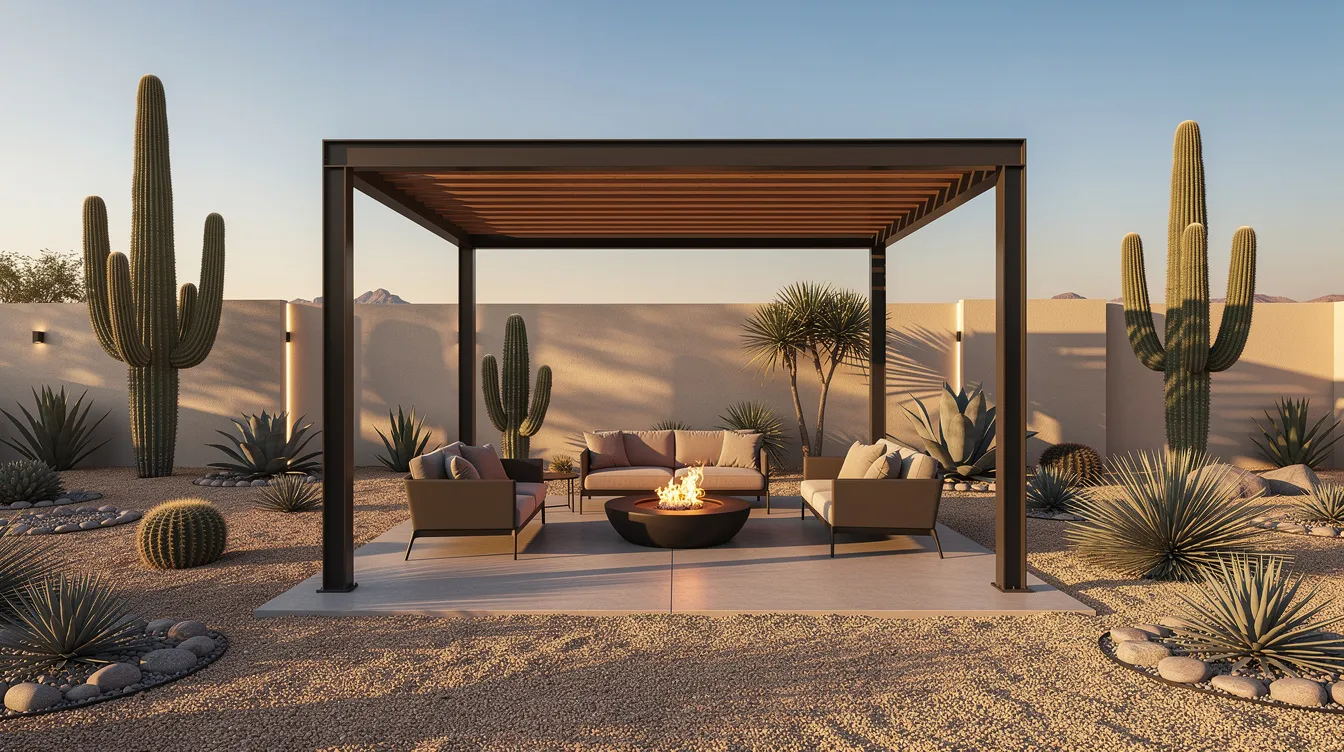
This is where Arizona landscape design separates from every other market. Without shade planning, your outdoor space is unusable from May through September between roughly 11 a.m. and 7 p.m. Pergolas, patio covers, shade sails, and strategically placed trees block western and mid-afternoon sun. Arizona’s recent HB 2342 law now prohibits HOAs from banning shade structures in backyards, giving homeowners more freedom to add these elements without fear of denial.
Water-wise plant selection
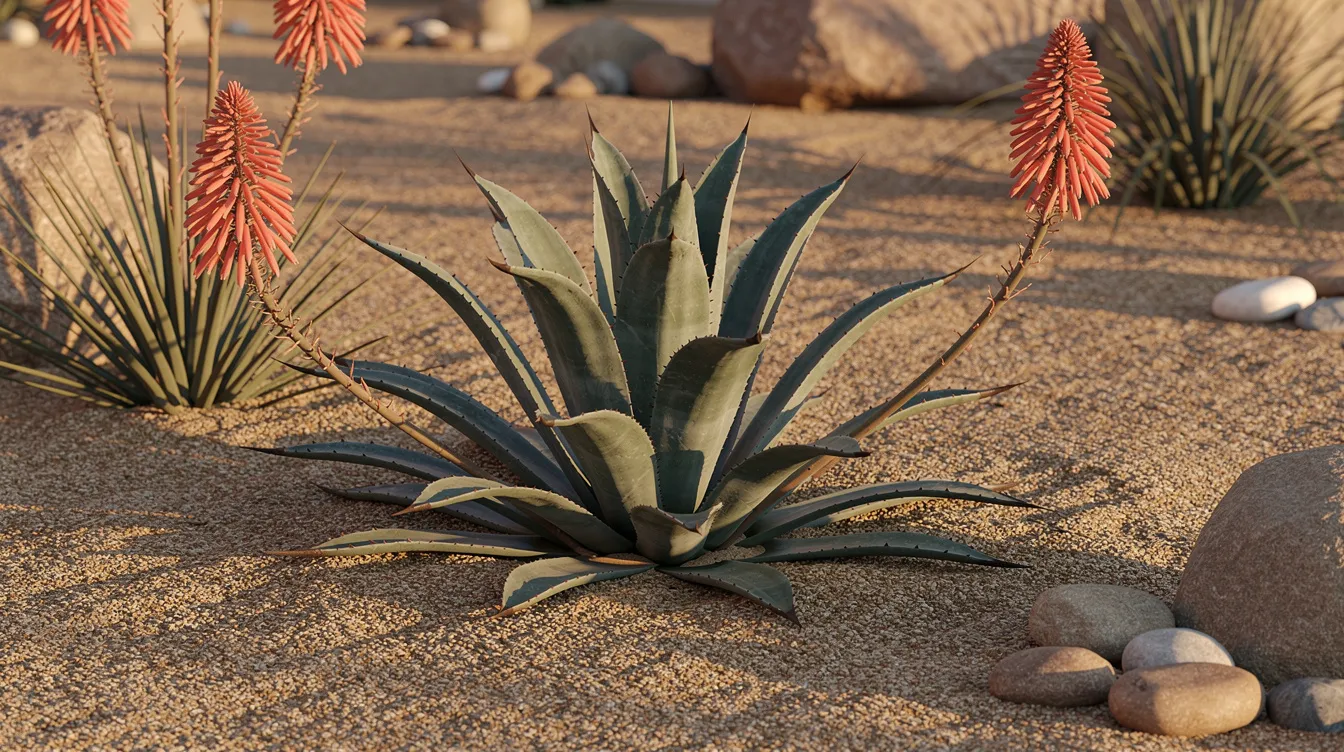
Xeriscaping reduces the need for irrigation with drought-tolerant plants, and it’s the dominant approach in Arizona landscape design. Native plants like Palo Verde, Texas sage, lantana, agave, and desert spoon thrive with minimal water when grouped by similar irrigation needs. Sustainable gardens often use native plants to support local ecosystems while keeping water bills manageable. Consider your local hardiness zone for plant selection, as Phoenix’s zones 9b–10a support a specific palette that differs from Flagstaff or Tucson.
Irrigation and drainage
Drip irrigation zones with properly spaced emitters deliver water directly to root zones. Drainage design ensures grading moves monsoon runoff away from the house and hardscape. Surface features like swales, rock channels, and permeable paving handle the sudden downpours that define Arizona’s monsoon season from June through September.
Working with Landscape Designers Who Understand HOAs
Many Phoenix-area neighborhoods built between roughly 1995 and 2025 have HOAs with detailed CC&Rs governing everything from rock color to the species of trees in your front yard. Working with a landscape designer who already knows these rules saves you review cycles and rejection letters.
The typical HOA review process:
-
Submit a conceptual landscape plan with overhead layout
-
Include a plant list with species names, sizes at maturity, and quantities
-
Provide material and color samples for pavers, walls, rock/gravel, and any fencing
-
HOA architectural review committee reviews and responds, typically within 2–4 weeks
When submittals are incomplete or include non-conforming materials, expect additional review cycles of 1–2 weeks each. A complete package from a designer who knows your community’s guidelines usually sails through the first time.
Common HOA concerns in Arizona communities:
-
Front yard desert landscape requirements (minimum ground cover percentages)
-
Maximum turf area (some communities like Norterra in Phoenix limit turf to 50% of front yard landscape area)
-
Approved rock and gravel colors
-
Wall and fence heights, especially along streets and common areas
-
Visibility requirements on corner lots (sight triangles for traffic safety)
-
Screening of RV gates, trash containers, and utility equipment
Experienced Arizona landscape designers pre-empt HOA rejections by selecting materials, plant heights, and colors that align with community guidelines from day one. They maintain libraries of rules for specific communities like Power Ranch, Fulton Ranch, Ocotillo, Eastmark, and Agritopia.
Before hiring, ask your designer how many projects they’ve successfully taken through your specific HOA’s review process and whether they can provide HOA-ready drawings with all required documentation.
Pavers & Hardscape Design for Arizona Outdoor Living
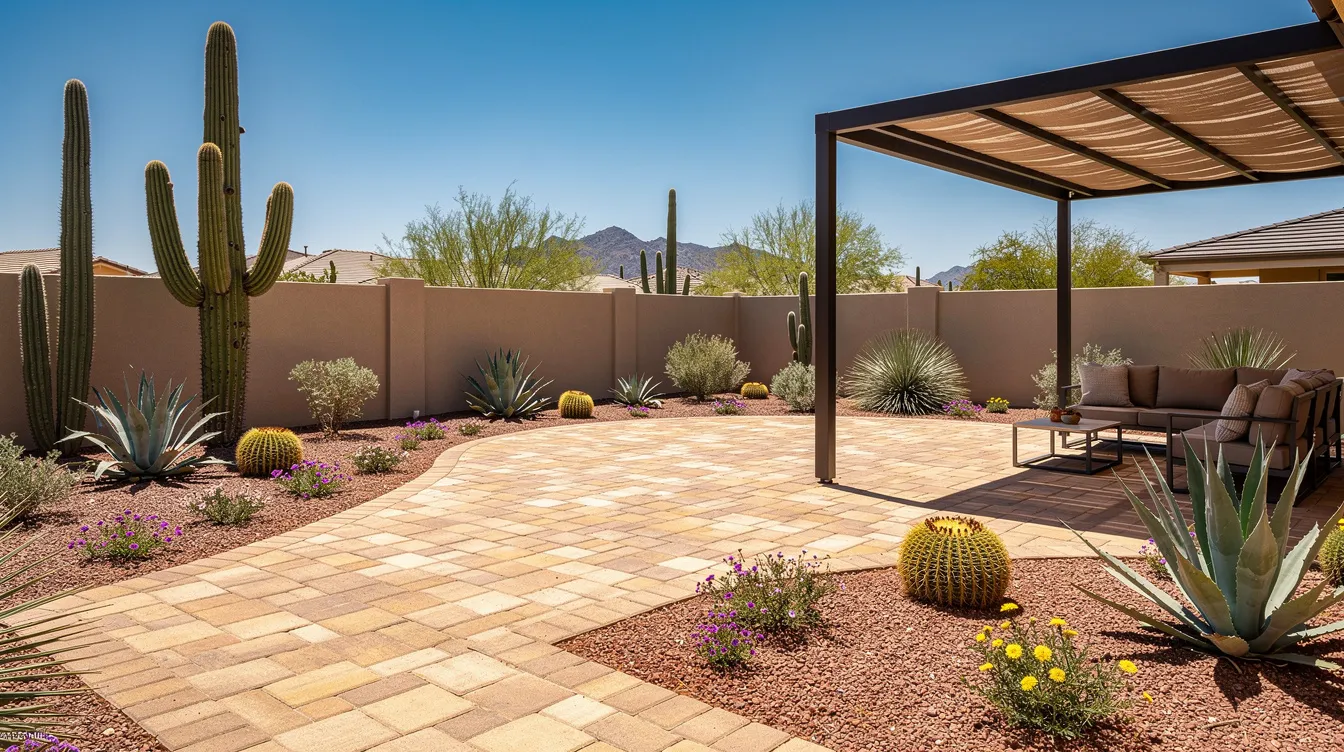
Pavers and hardscape elements define how an outdoor space feels and functions. In Arizona’s low-lawn yards, hardscape often makes up 50–70% of the total landscape, making material selection one of the most consequential decisions you’ll make.
Common Arizona paver applications:
-
Driveway extensions and motor courts
-
Front yard entry walks with contrasting borders
-
Backyard patios and outdoor dining surfaces
-
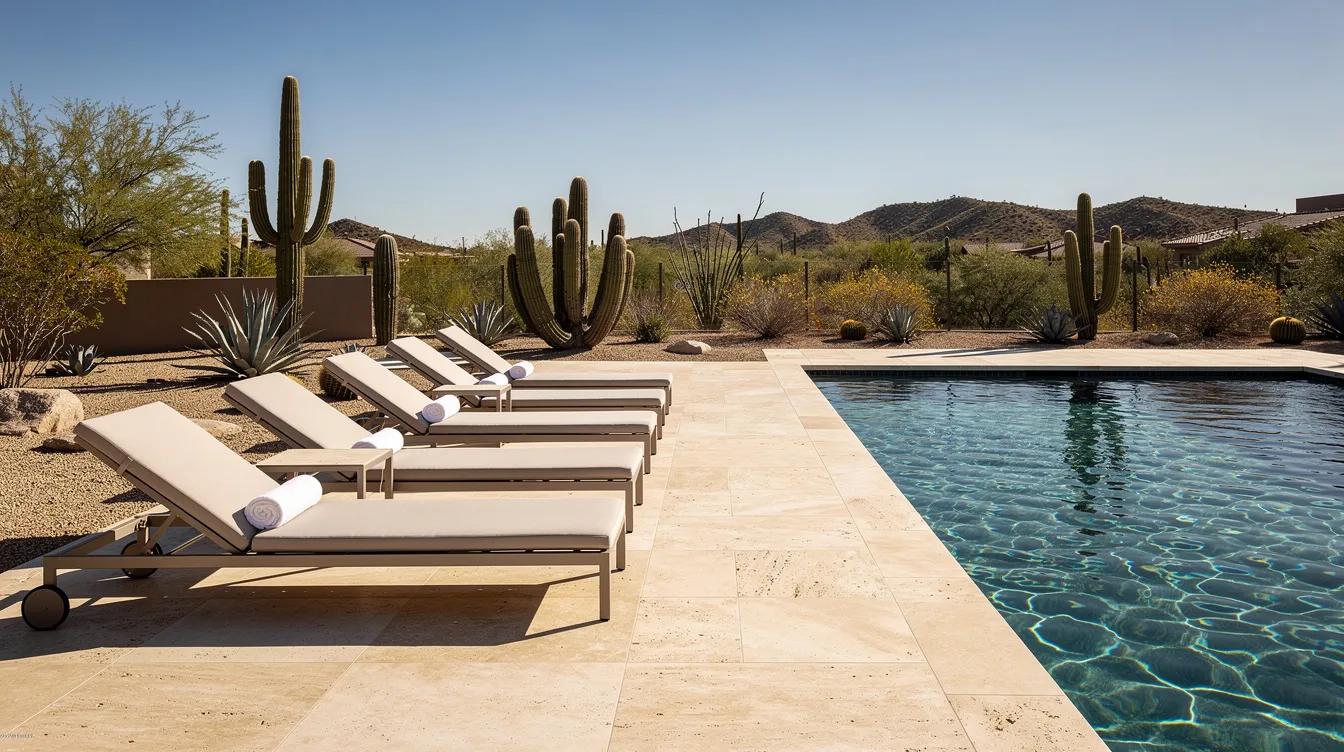
Pool decks (where heat performance is critical)
-
Side yard walkways connecting front to back
Material comparison for Arizona heat:
|
Material |
Heat Retention |
Slip Resistance |
Maintenance |
Cost Range (per sq ft) |
|---|---|---|---|---|
|
Travertine |
Low (20–30°F cooler than concrete in direct sun) |
Good with tumbled/brushed finish |
Seal every 2–3 years |
$12–$21 |
|
Concrete pavers |
Moderate to high |
Varies by texture |
Seal periodically, re-sand joints |
$8–$15 |
|
Porcelain pavers |
Moderate |
Can be slippery unless textured |
Low |
$10–$18 |
|
Natural stone (flagstone) |
Low to moderate |
Good with natural texture |
Varies |
$14–$22 |
Plan for plants after establishing hardscape and layout. Designers typically lock in paver patterns, patios, walkways, and walls first, then layer in softscape (plants, turf, ground cover) and lighting to complete the space. Low-impact materials are preferred in sustainable landscape practices, especially for pool decks and areas near planting beds.
Popular design features include built-in seating walls, raised planters in matching stone or stucco, fire pits, outdoor kitchens, and water features that serve as focal points and wind-noise buffers. Homeowners should request a detailed hardscape plan with pattern diagrams, border layouts, and joint lines to avoid awkward cuts and trip hazards in the final result.
Design Features that Elevate Your Front Yard
The front yard is the first impression of your house and often the most heavily regulated area under HOA guidelines. A well-designed front yard balances curb appeal with compliance.
Focal elements that work in Arizona front yards:
-
A paver entry path with a contrasting border pattern (herringbone or running bond with a soldier course edge)
-
A small seating nook or bench area tucked near the entry, adding personal style without cluttering the space
-
Layered plantings with varying heights for year-round interest: a low groundcover foreground, mid-height shrubs, and one or two specimen trees
Low-voltage lighting along paths, steps, and accent plants enhances both curb appeal and safety after dark. Path lights with warm-tone LEDs (2700K–3000K) create an inviting glow without competing with porch lighting.
For color and texture, keep it simple: one or two gravel colors, a limited plant palette of three to five species, and consistent accent elements like matching pots or a cohesive house number style. The goal is a front yard that looks intentional and low maintenance, not busy.
Backyard & Side-Yard Design Solutions
Backyards in the Phoenix region come in all shapes, and many include narrow side yards that most homeowners ignore or use as dumping grounds for forgotten furniture and old equipment. Creative design solutions turn these areas into functional extensions of your living space.
Arranging outdoor rooms in the backyard:
-
Place the dining area near the kitchen door for easy food service
-
Position the lounge area near the pool or the best shade structure
-
Dedicate a quieter corner for a fire pit, reading spot, or small garden
Side-yard strategies:
-
Stepping-stone paths through decomposed granite for low maintenance access
-
Vertical gardens or wall-mounted planters for narrow spaces
-
Artificial turf strips for pet runs
-
Storage zones with screening walls that look intentional rather than afterthought
For privacy and noise control, stucco walls, decorative block, steel panels, and tall shrubs block street noise and neighboring sight lines. These elements also add artistic detail and texture that make walls feel like landscape features rather than barriers.
The Professional Landscape Design Process (Step by Step)
Understanding the design process helps you set realistic expectations for timeline, budget, and involvement. Here’s how a typical Arizona project flows from initial call to final build for 2024–2026 projects.
Step 1: Consultation
The process starts with an on-site or virtual walk-through. You’ll discuss budget range, wish list, HOA requirements, and how you want to use your outdoor space throughout the year. Consultation fees for landscape design sessions typically last 30 to 60 minutes. Good designers listen more than they talk in this phase.
Step 2: Site analysis
The designer measures lot lines, house footprint, existing trees, and drainage patterns. They note sun and wind exposure at different times of day, identify problem areas (standing water, heat traps, dead zones), and photograph the site from multiple angles. This detail forms the foundation of everything that follows.
Step 3: Concept phase
Using this data, the designer develops a 2D plan or digital rendering showing the basic layout of patios, turf, planting beds, and major landscape features. Designers use software like AutoCAD and Adobe Creative Suite for drafting professional plans. SketchUp is a tool for creating 3D landscape designs that help clients visualize depth and spatial relationships before committing to materials.
Step 4: Final landscape design plan
The final landscape design plan is a scaled drawing with a plant schedule, paver selections, lighting locations, irrigation zones, and construction notes that landscape contractors can price and build from. Choosing a landscape designer involves evaluating their portfolio and interviewing candidates to confirm they can deliver this level of detail. Designers should clarify costs and define deliverables in contracts before work begins.
Project management includes creating cost estimates and negotiating with vendors for materials like travertine, specialty pavers, and mature specimen plants. Professional landscape design fees generally account for 10% to 15% of total project costs.
From Design to Construction
A solid landscape plan reduces change orders, delays, and budget surprises once the build starts. Without one, contractors are guessing, and guessing gets expensive.
Designers may refer homeowners to vetted paver and hardscape contractors, irrigation installers, and pool remodelers across the Phoenix metro area. Getting bids from two or three contractors using the same plan ensures apples-to-apples pricing.
Typical construction timelines for a complete front and backyard project run 3–8 weeks depending on scope, material lead times, and weather. HOA and city inspection windows may add a few days at key milestones.
Keep your designer involved through occasional site visits or virtual check-ins during construction. They can catch discrepancies between the build and the original landscape plan before they become permanent.
Landscape Design Ideas Tailored to Arizona Climate
Arizona outdoor spaces benefit from designs that perform in extreme heat, occasional frost, dust storms, and monsoon rain. The best landscape design ideas for this climate aren’t borrowed from coastal California or the Pacific Northwest. They’re built for the Sonoran Desert.
Low-water, high-impact planting ideas:
Mass plantings of desert ruellia, red yucca, penstemon, and desert marigold deliver seasonal color with minimal irrigation. Group these in drifts of five or more for visual impact rather than scattering individual plants across a gravel field.
Shade-first design concepts:
Integrate pergolas, ramadas, and shade sails oriented to block western sun between 3–7 p.m. during peak summer months. This single move extends usable outdoor hours more than any other design decision.
Design styles popular in Phoenix:
While Arizona has its own character, global garden styles influence local design:
-
Modern desert: clean lines, monochromatic plant palettes, geometric paver layouts. Modern gardens emphasize uncluttered designs and curated plant selections.
-
Spanish-inspired courtyards: stucco walls, clay pots, fountain water features, and warm earth tones. English gardens feature defined hedges and water features, which translate into courtyard designs with boxed planters and bubbling pots.
-
Lush “oasis” zones around pools: tropical-leaning plants in protected microclimates near pool equipment and misters.
-
Cottage gardens are known for their wild, informal plantings, which can work in shaded Arizona courtyards with the right species.
-
Woodland gardens use dense foliage and lush ground cover, adaptable in north-facing or heavily shaded areas.
Eco-friendly gardens often include native plants and rainwater barrels to supplement irrigation. Rainwater barrels are common in eco-friendly landscape designs and can be integrated discreetly behind walls or in side yards. Sustainable designs often include vegetable plots for local food production, and kitchen gardens with raised beds work well in Arizona’s cooler months (October through April).
Blending softscape and hardscape:
Break up large expanses of rock with paver bands, boulder groupings, and planter walls. This creates a balance between structure and nature, preventing the “gravel parking lot” look that plagues many Arizona yards. Explore combinations of two or three materials rather than covering everything in one surface.
How Digital Vibes Agency Helps Landscape Designers Grow Online
If you’re a landscape designer or hardscape company reading this and wondering how to get in front of more homeowners searching for exactly these services, that’s where Digital Vibes Agency comes in.
Based in Chandler, AZ, Digital Vibes Agency is a full-service digital marketing partner for Arizona service businesses, including landscape designers, paver installers, and outdoor design firms. Here’s how we help clients in this space grow:
SEO that targets high-intent local searches. When a homeowner types “landscape designer Chandler,” “paver patio Phoenix,” or “HOA landscape plan Gilbert,” your business needs to appear. Our SEO services for Phoenix-area businesses are built around these exact search patterns.
PPC campaigns for immediate visibility. Google Ads focused on terms like “front yard design ideas Arizona,” “travertine pool deck installer,” and “HOA landscape approval help” put your business in front of homeowners who are ready to hire, not just browse.
Professional web design with project galleries. Before/after photos, 3D renders, and images of completed projects build trust and help homeowners visualize design solutions for their own landscape. Our team helps you present your best work through sites designed to convert. Learn more about choosing the right web design partner in Chandler.
Local SEO and Google Business Profile optimization ensure your business shows up in map results with reviews, photos, and accurate service area information from real projects completed in 2024–2026.
If you want to see what results-driven marketing looks like for service businesses in Arizona, explore our portfolio.
FAQ
How much does professional landscape design cost in Arizona in 2025–2026?
Professional landscape design costs range from $2,000 to $8,000 for residential projects in the Phoenix metro area. A standard Chandler or Gilbert front and backyard plan typically falls between $1,500 and $5,000, depending on lot size and the level of detail required. Larger custom lots, hillside sites, or projects requiring a licensed landscape architect and engineered plans can run from $5,000 to $10,000 or more. Landscape design services can cost hundreds to thousands of dollars depending on whether you need a simple concept sketch or a full construction document set.
Homeowners typically spend about 10% of their home’s value on landscaping when including design, pavers, plants, irrigation, and lighting. Costs depend on project size and level of detail required. Ask your designer whether fees are flat-rate or hourly (Arizona designers typically charge $72–$100 per hour), and confirm what’s included: number of revisions, HOA-ready drawings, and whether 3D renderings are part of the package.
How long does it take to get an HOA-approved landscape plan?
Once a designer submits a complete landscape plan package, most Phoenix-area HOAs respond within 2–4 weeks. That package needs to include a conceptual site plan, full plant list with species and sizes, material and color samples for pavers and walls, and fence or wall height specifications.
Incomplete submittals or requests for major changes (like new walls, driveway extensions, or non-standard materials) can add extra review cycles of 1–2 weeks each. Plan at least 4–8 weeks from hiring a designer to receiving final HOA approval before scheduling construction. Ask your designer how many projects they’ve successfully guided through your specific HOA’s process, as familiarity with a community’s architectural committee can cut weeks off the timeline.
Can I reuse my landscape plan if I switch contractors?
In most cases, the homeowner owns the final landscape plan they paid for, but confirm this in the designer’s contract before signing. The same plan can usually be sent to multiple landscape contractors for competitive bidding, though minor adjustments may be needed for each crew’s installation methods or material sourcing.
If a landscape architect sealed the drawings for city permitting, any significant changes may require updated stamped plans, which means additional fees. Keep digital copies in both PDF and CAD format if possible so the plan can be referenced, repriced, or updated over time without starting from scratch.
What’s the difference between hardscape and softscape in my design?
Hardscape refers to all non-living structural elements in your yard: pavers, concrete, stone, walls, steps, fire pits, outdoor kitchens, pergolas, and built-in seating. Softscape covers all living elements: trees, shrubs, groundcovers, turf (natural or synthetic), and container plantings.
A balanced Arizona landscape design typically combines durable hardscape surfaces with enough softscape to cool the space, soften harsh lines, and bring the beauty of nature into the yard. Most designers start with hardscape layout first, establishing the “bones” of the property, then layer in plants and lighting to complete the outdoor space. Too much hardscape amplifies heat; too little leaves the yard feeling sparse and disconnected.
How can I tell if a landscape designer really understands Arizona climate?
Ask for recent project photos from 2023–2025 located in Phoenix, Chandler, Gilbert, Mesa, or Scottsdale, with notes on how they handled shade, water use, and material selection for heat. A designer with real Arizona expertise will talk easily about drip irrigation zones, frost pockets at higher elevations, monsoon drainage design, and dust management.
Ask specific questions: What low-water plants do they specify most often? What paver materials do they avoid because they get too hot? How do they design outdoor rooms for 110°F+ days? Read reviews that mention long-term plant survival and how comfortable the outdoor space feels in summer. If a designer can’t name specific materials, plants, and tips for managing Arizona heat, they likely don’t have the local expertise your project demands.