If you’ve ever stared at a parched, patchy yard in July and wondered whether there’s a better way, you’re not alone. Across Arizona and the broader Southwest, thousands of homeowners and commercial property managers have made the switch to turf artificial grass, and the technology behind it has come a long way from the stiff, carpet-like surfaces of decades past. This guide breaks down everything you need to know about modern synthetic turf: what it’s made of, what it costs, how it’s installed, and how to choose the right product for your space. Whether you’re a homeowner planning a backyard upgrade or a turf installer looking to grow your business, you’ll find practical, data-backed answers here.
Key Takeaways
-
Modern artificial grass is a multi-layer system of UV-stable fibers, permeable backing, infill, and compacted base, engineered to look and feel like natural grass while eliminating the need for mowing, watering, or pesticides. In dry states like Arizona and Nevada, it can reduce outdoor water use by up to 70%, saving homeowners an estimated $800 to $2,000 per year on water bills alone.
-
Synthetic turf can be tailored for specific uses. Landscape turf creates a realistic front yard appearance. Pet turf offers antimicrobial protection and rapid drainage for dogs. Playground turf adds padding for safer play. And dedicated putting greens replicate elite course feel with consistent ball roll, all in your own backyard.
-
Digital Vibes Agency serves as a one stop shop marketing partner for artificial grass projects, helping turf installers and landscaping companies attract leads through SEO, PPC, web design, and content marketing, so the craftsmanship of their installations gets the online visibility it deserves.
-
A fully installed residential artificial turf project in Arizona typically costs between $9,000 and $14,000 for a 1,000 sq ft yard (roughly $9–$14 per sq ft), with most homeowners reaching payback in five to six years through water and maintenance savings. High-quality artificial turf can last between 10 to 20 years.
-
This guide uses clean subheadings, short paragraphs, and comparison points so it’s easy to skim whether you’re a homeowner, a landscaper, or a small turf installation business researching the market.
What Is Turf Artificial Grass? (Modern Synthetic Turf Explained)
Artificial grass is made of synthetic fibers designed to resemble natural grass. It’s a manufactured surface, typically constructed from polyethylene or polypropylene yarns, that replicates the look and feel of a real lawn without requiring irrigation, mowing, or seasonal care. Artificial grass is categorized primarily by the material used for its fibers, and each material brings different characteristics in softness, durability, and heat resistance.
The world of synthetic turf has transformed dramatically since the first AstroTurf fields of the 1960s. Those early surfaces were coarse, unrealistic, and uncomfortable. Today’s turf artificial grass is a multi-layer system built for realism and performance.
Here’s how a modern turf system stacks up, from the ground up:
-
Compacted base layer: Three to four inches of crushed rock or decomposed granite, graded and compacted for stability and drainage.
-
Turf backing: A permeable primary and secondary backing that holds the tufted fibers in place and allows water to pass through.
-
Tufted fibers (blades): UV-stable polyethylene or polypropylene yarns in multiple tones, including green blades and brown thatch, to reduce shine and mimic real grass.
-
Infill: Sand, coated sand, zeolite, or other materials spread between the blades to support fibers, manage heat, and improve drainage.
-
Perforations or fully permeable backing: Allows rainwater and rinse water to drain into the base and soil below.
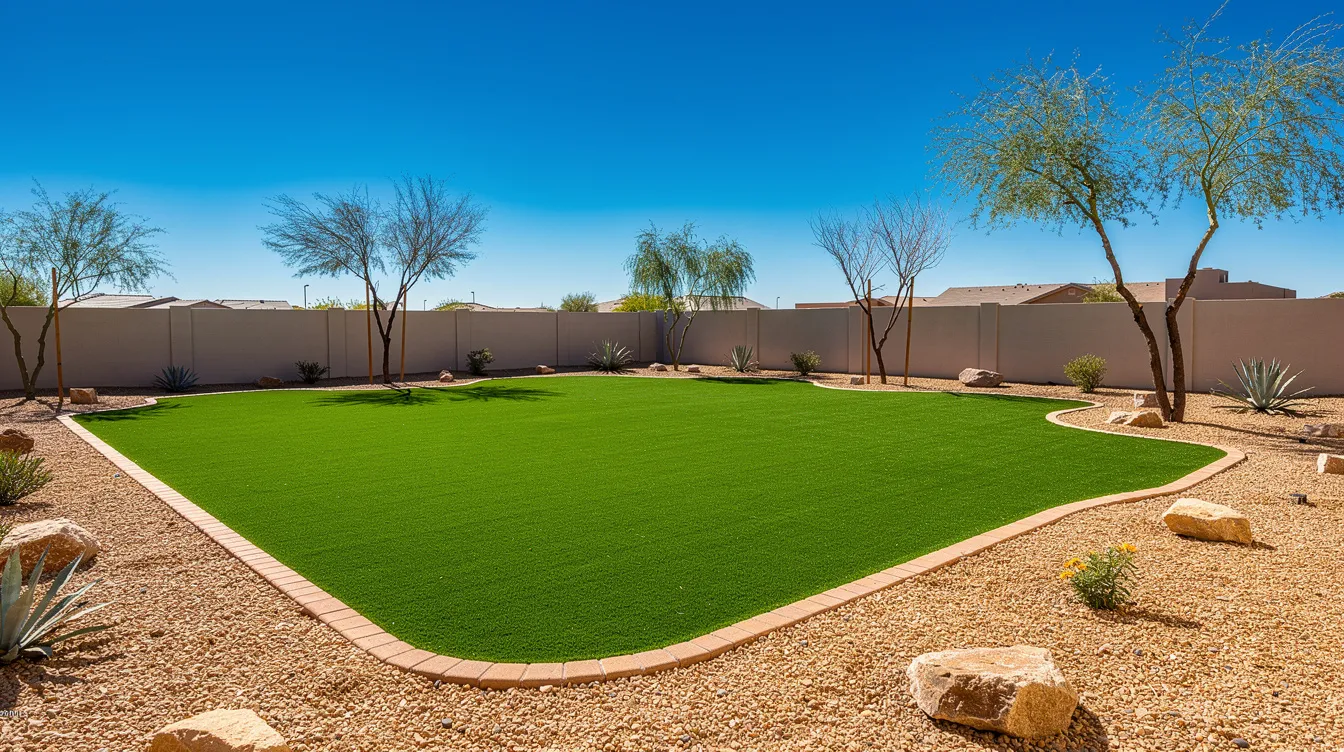
This guide focuses on residential lawns, pet turf, commercial landscapes, and backyard putting greens rather than massive stadium fields. In hot, arid regions like Arizona, including Chandler, Phoenix, Gilbert, and Mesa, artificial turf has become a mainstream alternative to water-hungry natural lawns by 2025.
Benefits of Artificial Grass for Homeowners and Businesses
Since roughly 2015, a growing number of homeowners, HOAs, and small businesses have switched to artificial grass, especially in drought-prone states where water scarcity drives both cost and policy. Artificial turf is popular for commercial applications such as office landscaping and event venues, and its residential adoption has accelerated just as quickly.
Here are the benefits that drive demand:
-
Water savings: Artificial grass reduces outdoor water use by up to 70%. Replacing a 1,000 sq ft natural lawn in Phoenix can save several thousand gallons per year and cut annual water bills by $800 to $2,000, making artificial turf a suitable option for residential yards with water restrictions.
-
Time savings: Artificial grass requires no mowing, watering, or pesticides. The hours spent on edging, fertilizing, reseeding, and battling weeds simply disappear.
-
Year-round visual appeal: Artificial turf remains green and uniform regardless of weather or season. No brown patches, no mud, no bare spots.
-
Durability: Quality landscape turf can last 10 to 15 years under typical use, with premium products reaching closer to 20 years. Artificial grass is UV-resistant and fade-proof, holding its color through intense desert sun.
-
Accessibility and safety: Turf provides a stable, even surface for kids, seniors, and high-traffic areas without the ruts and divots that natural lawns develop.
-
Commercial value: Artificial turf is popular for commercial applications, producing a polished appearance for storefronts, dog parks, and event spaces.
To put it in perspective, a natural lawn of 1,000 sq ft in Phoenix may require 15 to 20 hours of maintenance per month during growing season and over $2,000 per year in combined water, fertilizer, and service costs. A turf lawn requires a fraction of that time and virtually none of those recurring expenses.
Artificial turf can significantly reduce water usage in landscaping, but it’s worth acknowledging the trade-offs honestly. Turf is a manufactured product made from non-biodegradable petroleum-based materials. Mitigations include choosing products with recyclable components, installing permeable bases, and integrating live plants and trees for a balanced, sustainable landscaping approach.
Types of Turf Artificial Grass: Landscaping, Pets, Sports, and Putting Greens
Not all synthetic grass is created equal. Manufacturers design specific products for different uses, and choosing turf involves matching its features to specific applications. Here’s what to know about each major category:
Landscape artificial grass is designed for front and back yards where appearance matters most. Landscape turf provides a realistic appearance for front yards, with longer pile heights (typically 1.5 to 2 inches), softer blade shapes, and multi-tone color blends. It’s the go-to choice for homeowners seeking a natural-looking lawn without the upkeep.
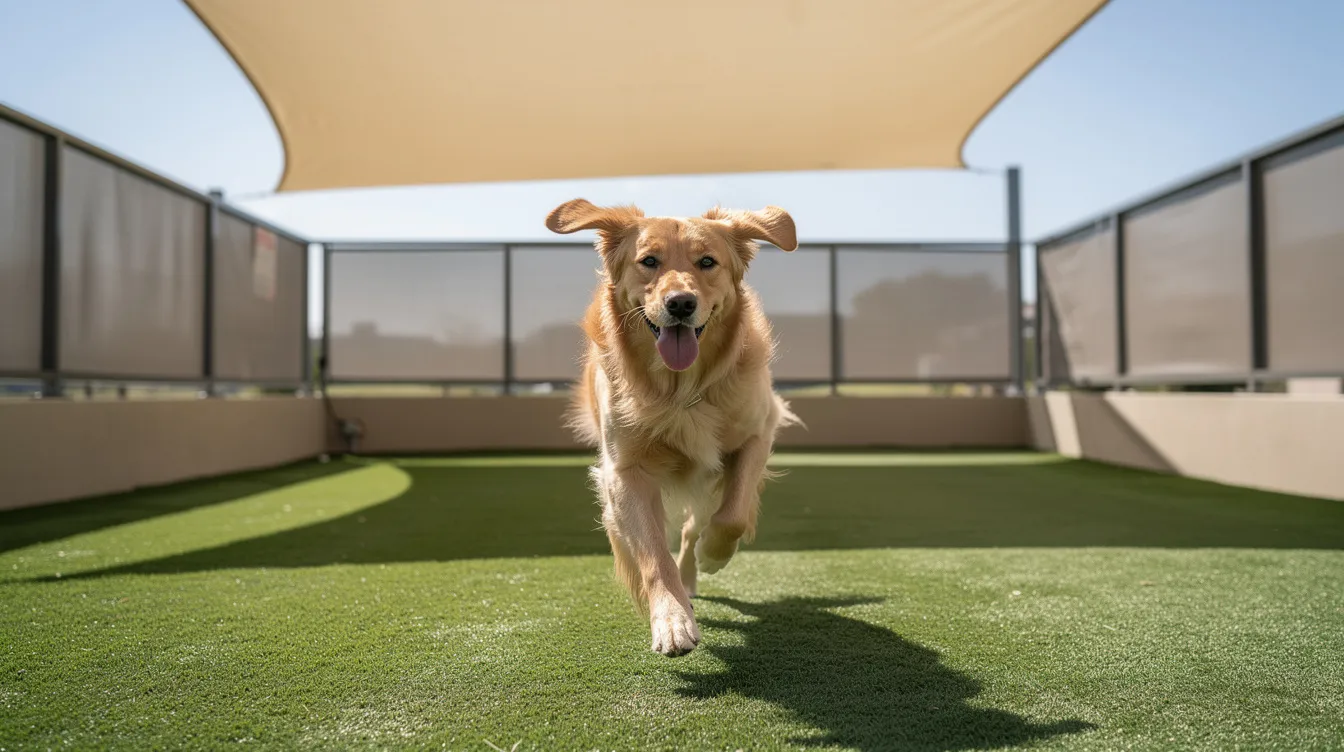
Pet-friendly turf is engineered for dogs and other animals. It features highly permeable backing for rapid drainage (often 100+ inches per hour), antimicrobial infill or coatings, and shorter pile height for easier waste cleanup. Smart Turf® pet turf stays 99% cleaner than natural grass, which speaks to the advances in this category.
Playground and athletic turf prioritizes safety and performance. Extra padding, shock-absorbing underlays, and robust fibers handle heavy use. Smart Turf® athletic turf is designed for maximum durability, and artificial grass is often used for lawns, playgrounds, and sports fields where high performance and resilience are non-negotiable.
Backyard putting greens use much shorter, denser turf with specific infill to control ball roll speed. We’ll cover these in detail below.
SYNLawn offers artificial grass for rooftops and dog parks, and SYNLawn has over 120 global distributors for installation support, illustrating how the variety of products on the market continues to expand. The key is selecting turf that matches your primary use, whether that’s a family yard, a dog run, or an avid golfer’s practice green, and your climate.
Planning an Artificial Grass Project: From Vision to Finished Lawn
Most artificial grass projects start the same way: frustration. Maybe it’s a patchy lawn that refuses to stay green despite constant watering. Maybe it’s mud tracked into the house every time the dogs come inside. Maybe it’s a water bill that climbs every summer. Whatever the trigger, planning the project well makes the difference between a result you love and one that disappoints.
Here’s the planning flow that works:
-
Measure the area. Whether it’s a front yard, side yard, dog run, rooftop, or courtyard, accurate measurements are the starting point for every quote.
-
Define the main goal. Low-maintenance landscape? Kid play area? Dedicated pet zone? Putting green? A combination? Your primary use drives the product and design.
-
Set a realistic budget range. Before you start shopping turf samples, understand that installed costs in Arizona typically range from $9 to $14 per sq ft for quality residential turf. Setting a budget early prevents sticker shock.
-
Check HOA and city guidelines. In 2024 and 2025, many Arizona cities have updated their rules around front yard materials and drainage. Some HOAs now actively encourage drought-friendly landscaping, but written permission before installation is always the safest path.
For design inspiration, look at local Arizona landscapers like Green Valley Hardscapes, whose before-and-after projects show how turf integrates beautifully with pavers, gravel, trees, and pergolas, creating outdoor spaces that feel intentional rather than artificial.
For contractors and landscape companies, Digital Vibes Agency can help turn this planning phase into a lead-generating funnel via educational blog content, landing pages, and local SEO, so homeowners who are ready to invest find your business first.
Design Ideas for Artificial Turf Landscapes
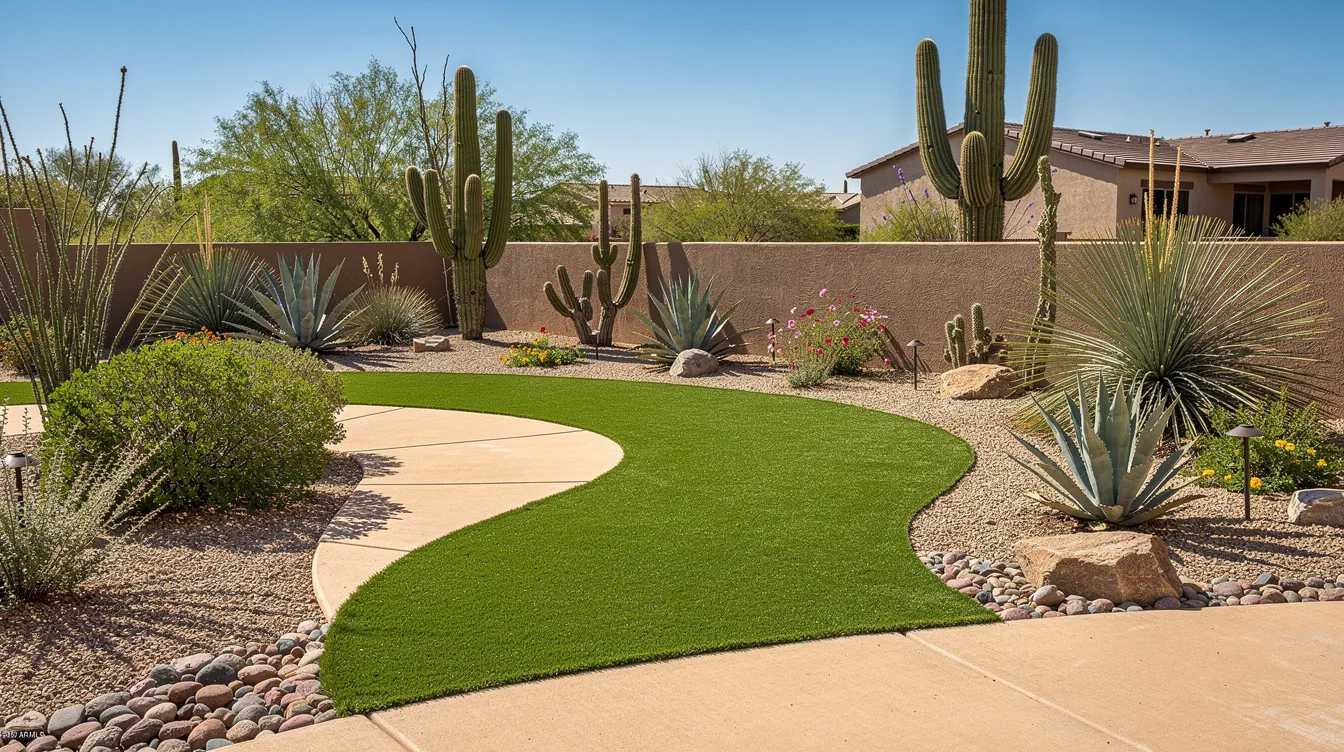
The most amazing turf installations don’t treat synthetic grass like wall-to-wall carpet. They combine it with hardscapes, native plants, and functional zones to create outdoor living spaces that feel natural and inviting.
Here are concrete design concepts that work especially well in desert climates:
-
Curved turf “islands” bordered by paver walkways or decomposed granite, breaking up the yard into defined zones.
-
Turf between concrete pavers or stepping stones, creating a modern, geometric look that’s easy to maintain.
-
Mixed-use spaces: half turf play area for kids, half pergola-covered dining zone, a popular Arizona outdoor living trend from 2020 through 2025.
-
Rooftop and balcony turf for urban relaxation spaces. Even small rooftops can be transformed into green retreats.
-
Side-yard dog runs with pet-specific turf and gravel borders, keeping the main yard clean and the dogs happy.
-
Putting green with patio integration, blending a practice green into an outdoor kitchen or fire pit area.
-
Multi-tone blade and thatch selection that matches desert light, avoiding too-uniform neon green in favor of warm, natural-looking blends with brown thatch.
Integrating trees and drip-irrigated plant beds alongside turf keeps the yard feeling alive. A yard that’s 60% turf and 40% native plantings, hardscape, and shade structures looks far more realistic than one that’s 100% synthetic.
For turf installers, strong before-and-after photography of these design concepts is one of the most effective tools for attracting leads when properly marketed on their website and social channels.
Specialty Putting Greens: Bringing the Course Home
Backyard putting greens are one of the fastest-growing artificial grass project categories for homeowners and golf enthusiasts. Since 2020, demand has surged as people invest more in their outdoor spaces and look for recreation that doesn’t require a tee time.
The difference between standard landscape turf and dedicated putting green turf is significant. Putting greens use a much shorter pile height (typically under one inch), a denser stitch rate for uniform surface consistency, and specialized infill to control ball roll speed. Smart Turf® putting green turf replicates elite course feel, giving golfers a practice surface that responds predictably.
Popular putting green features include:
-
Two to five custom-cut holes with regulation cups and flags.
-
Slight undulations and contours for challenging putts.
-
Fringe turf around the perimeter for chipping practice.
-
Integration with paver patios, tee mats, or outdoor kitchens.
-
Sizes ranging from compact 10′ x 15′ practice areas to larger 400 to 600 sq ft backyard greens.
A well-marketed local turf business can position itself as the go-to putting green specialist in its metro area. SEO-optimized service pages, project galleries, and customer testimonials, managed by an agency like Digital Vibes, help that excellence stand out to golfers actively searching for “backyard putting green” in their city.
Artificial Turf for Pets: Cleaner, Safer Dog Yards
Natural grass and dogs don’t always coexist peacefully. Digging, urine burn, mud after irrigation, and persistent odors are constant battles, especially in small urban yards or rental properties. For pet owners in hot climates, these problems are amplified.
Pet turf addresses each of these challenges directly:
-
Highly permeable backing allows rapid drainage, often exceeding 100 inches per hour, so liquids move through the surface and into the base instead of pooling.
-
Antimicrobial technology: Smart Turf® artificial grass is infused with Microban® for hygiene, inhibiting bacterial growth and reducing odor at the fiber level.
-
Shorter pile height (often under 1.25 inches) makes solid waste pickup faster and more thorough.
-
Durable fibers resist digging, scratching, and the heavy traffic that comes with active dogs.
When designing a pet-friendly artificial grass project, consider:
-
A dedicated dog run along the side yard, separate from the main family lawn.
-
Shaded areas for summer relief, critical in states like Arizona and Nevada where surface temperatures climb.
-
Strategic placement of waste stations and hose bibs for easy, regular cleaning.
Cleaning routines are straightforward: daily solid waste pickup, periodic rinsing with a hose, and optional enzyme-based cleaners to keep the synthetic turf fresh. The result is a yard that’s safer and cleaner for pets and families alike.
Installation Overview: How Artificial Grass Is Installed
While DIY installation options are available for artificial grass projects (particularly small, simple areas), most long-lasting turf installations rely on professional crews. The equipment, expertise, and attention to detail required for a seamless result are difficult to replicate without experience.
Here are the major installation stages:
Site evaluation and measuring. The crew assesses the area, checks drainage conditions, and confirms measurements against the project plan.
Removal of existing sod or ground cover. Old grass, weeds, and organic material are stripped and hauled away.
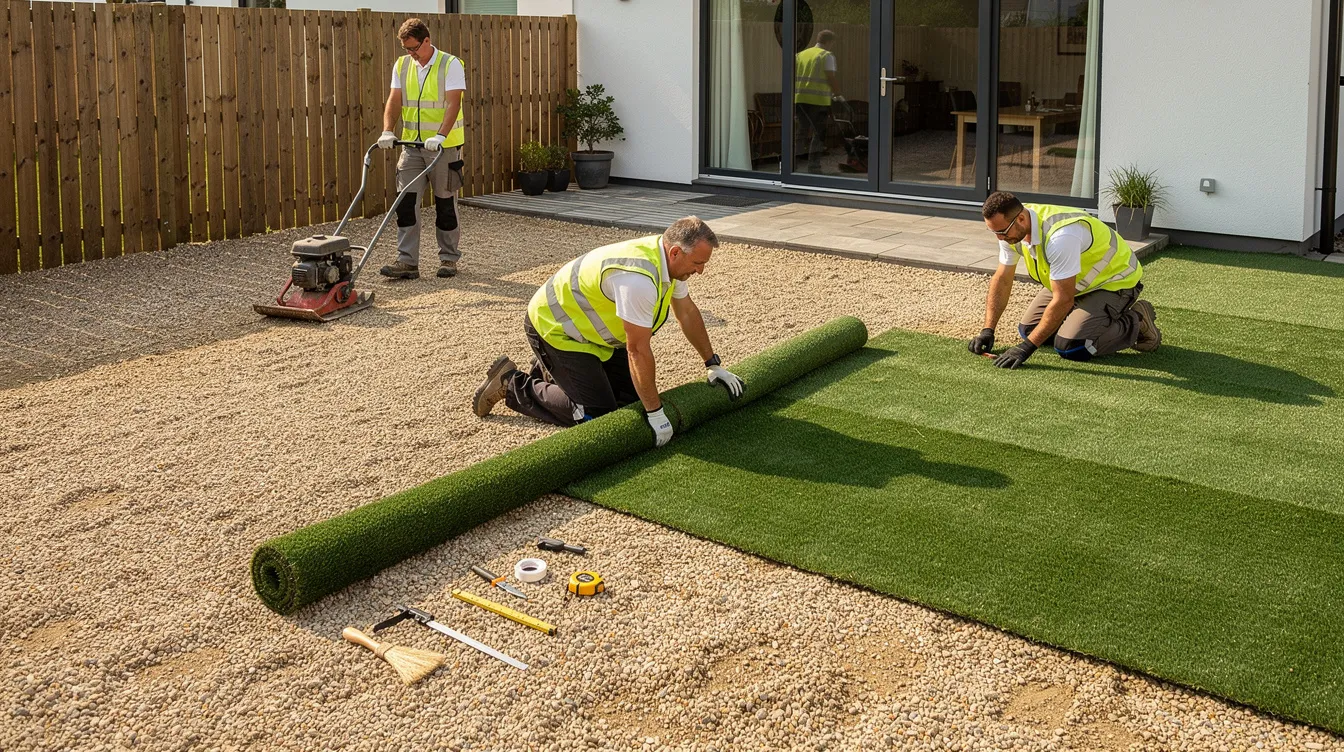
Grading and compaction. A crushed rock or decomposed granite base, typically three to four inches deep, is spread, graded to a slight slope (around 1–2%), and mechanically compacted to create a stable, draining foundation.
Laying, trimming, and seaming. Turf rolls are positioned, trimmed to fit the area precisely, and seamed together using adhesive and seam tape. Blade direction must be consistent across all panels.
Adding infill and power-brooming. Infill material is spread between the blades and a power broom is used to stand the fibers upright, giving the turf its natural, full appearance.
Final inspection and cleanup. Edges are secured, seams are checked for visibility, drainage is tested, and the site is cleaned.
Key quality factors that separate a great install from an average one include base depth and compaction, seam invisibility, drainage performance, and proper edge securing to prevent wrinkles or uplift. Clear project photos and step-by-step explanations on an installer’s website build trust with prospects, a content strategy Digital Vibes Agency can develop and promote.
Cost of Turf Artificial Grass and Long-Term ROI
Artificial grass costs vary widely by type and quality, and transparency about pricing helps both homeowners and installers set realistic expectations. Here are 2024–2025 ranges for fully installed residential projects in Arizona:
-
Standard landscape turf: roughly $11 to $14 per sq ft installed, including base prep, materials, and labor.
-
Premium or pet-specific turf: $15 to $20 per sq ft with specialized infill and antimicrobial features.
-
Putting greens: often at the higher end due to custom shaping, dense turf, and cup installation.
-
Budget or decorative turf: $5 to $10 per sq ft for lighter-use applications.
For a 1,000 sq ft yard, total installed cost typically falls between $9,000 and $14,000 for mid-grade turf. Installation costs are included in some artificial grass quotes, but always confirm what’s covered.
A typical quote includes:
-
Synthetic turf material
-
Base materials and labor
-
Infill, edging, and disposal of old sod
-
Optional extras like lighting, drainage enhancements, or putting green cups
The ROI case is compelling. Homeowners report saving thousands annually with artificial grass. In the Phoenix example, combined savings on water, lawn service, fertilizer, and repairs can reach approximately $2,000 per year. That puts payback at roughly five to six years, after which savings accumulate for the remaining life of the turf.
When comparing bids, ask about pile height, face weight, warranty terms, and base prep details rather than just the bottom-line cost per square foot. Turf installers who use online cost calculators and educational blog posts to pre-qualify leads consistently set better expectations and close at higher rates.
Maintenance: Keeping Synthetic Turf Looking Great
Artificial grass is “low-maintenance,” not “no-maintenance.” A small amount of regular care keeps turf looking and performing its best for years. Synthetic turf can last over 15 years with proper care.
Standard landscape turf care:
-
Rinse periodically to remove dust, pollen, and light debris.
-
Brush high-traffic areas every few weeks to keep blades standing upright.
-
Remove leaves, debris, and spills promptly.
-
Check infill levels every one to two years and top off as needed.
Pet area care:
-
Daily solid waste pickup.
-
More frequent rinsing (weekly or as needed) with optional enzyme-based cleaners.
-
Monitor drainage to ensure liquids flow freely through the backing.
Putting green care:
-
Groom the surface regularly to maintain consistent ball roll.
-
Keep the area free of debris that could affect ball speed.
-
Inspect cup areas and fringe turf for wear.
Dusty or windy regions (common in Arizona):
-
Blow off accumulated sand or dust to protect drainage and maintain appearance.
Typical manufacturer warranties range from 8 to 15 years against UV fading or manufacturing defects. Smart Turf® offers a 15-year warranty on their products. To keep warranties valid, follow the manufacturer’s recommended maintenance schedule and use only approved cleaning products.
Environmental Impact: Water Savings, Heat, and Sustainability
The environmental conversation around turf artificial grass is nuanced. There are genuine, measurable benefits, but also legitimate concerns worth understanding.
Major environmental benefits:
-
Significant outdoor water reduction, particularly impactful in states like Arizona, California, and Nevada. Cities like Phoenix have increased rebates for turf and xeriscape conversions to encourage water conservation.
-
Elimination of gas-powered mowers and blowers, which cuts emissions and noise.
-
No need for fertilizers, herbicides, or pesticides, reducing chemical runoff into waterways and soil.
Key concerns and responses:
-
Heat: Artificial turf can absorb and retain heat, making it uncomfortable for bare feet during midday in summer, sometimes 20 to 30°F hotter than natural grass. Mitigations include shade structures (pergolas, shade sails, trees), cooling infill products, and light-colored surrounding hardscape. Scheduling outdoor play for mornings and evenings during peak summer months also helps.
-
Microplastics and fiber shedding: Choosing quality artificial grass with low-shed fibers and proper installation reduces infill migration. Look for products from reputable manufacturers committed to minimizing environmental impact.
-
Runoff: Artificial turf can restrict water absorption into the ground compared to soil. Proper base prep with permeable materials and correct grading mitigate this. Studies have shown that short-pile turf with well-designed bases performs better than long-pile alternatives for water management.
-
End-of-life disposal: Turf is made from non-biodegradable petroleum-based materials. Emerging recycling programs are addressing this, and buyers should ask about reclaim and recycling options when selecting a manufacturer.
The most effective approach to sustainability is integrating synthetic turf into a broader sustainable design that includes native plants, shade trees, and permeable hardscape, rather than replacing every square inch of a yard with turf.
Choosing the Right Artificial Grass Product
Product selection has a bigger impact on long-term satisfaction than most homeowners realize. Here’s a checklist of the specs that matter:
-
Pile height and density: Landscape turf typically runs 1.5 to 2 inches; putting greens are under 1 inch. Higher face weight generally indicates higher density and better quality in turf.
-
Fiber material: Polyethylene is the most popular material used for residential lawns due to its softness and realism. Polypropylene is a lightweight option but less durable than polyethylene and nylon. Nylon is the strongest and most durable material used for artificial turf, often used in high-traffic or sports applications.
-
Blade shape: C-shaped, S-shaped, and flat-fish profiles each create different textures and levels of realism.
-
Backing type and permeability: Fully permeable backings drain faster and work better for pet areas. Hole-punched backings are standard for landscape use.
-
Thatch color and multi-tone realism: Brown and tan thatch layers reduce the “too perfect” look and cut down on surface shine.
Match the product to the use case:
-
Softer, longer turf for barefoot family lawns.
-
Shorter, durable turf with antimicrobial properties for dog runs and high-traffic zones.
-
Professional-grade putting green turf for golfers wanting specific stimpmeter speeds and accurate ball roll.
Purchase Green is the largest artificial grass distributor in the U.S., with over 60 artificial grass warehouses nationwide, offering access to a wide variety of products. Smart Turf® artificial grass is made in the USA and backed by a 15-year warranty, making it a strong choice for homeowners who value domestic manufacturing and long-term commitment.
Before deciding, request physical samples, visit showrooms where possible, and see real-world installations in your climate. Turf retailers and installers can simplify this process for customers with comparison charts, spec sheets, and FAQ-rich landing pages.
Working with a Professional Installer vs. DIY
The choice between hiring a professional crew and tackling installation yourself comes down to project scale, skill level, and risk tolerance.
When professional installation makes sense:
-
Projects over 200 to 300 sq ft, or any project with multiple seams.
-
Complex layouts with curves, putting greens, or integration with hardscaping.
-
Situations requiring heavy equipment for base excavation and compaction.
-
When warranty coverage and aftercare support matter. Professionals have access to specialized tools and experience that reduce the risk of visible seams, poor drainage, and premature failure.
When DIY can work:
-
Very small or simple areas like a balcony, a narrow side strip, or a single-panel dog run.
-
Homeowners with construction experience who understand the importance of base depth and compaction.
-
Situations where budget is extremely tight and the homeowner accepts the learning curve.
Even for DIY, always follow the manufacturer’s specs for base depth, infill type, and compaction. Cutting corners on the base is the most common cause of early turf failure.
Many homeowners find local installers through Google searches, Maps, and social media. That’s why turf contractors benefit heavily from strong local SEO and paid ads managed by a specialist agency. When someone searches “artificial turf installer near me,” the business that shows up first wins the lead.
Digital Marketing for Turf and Artificial Grass Businesses
The artificial grass market has grown rapidly since 2020, and that growth has increased competition for local installers, landscapers, and putting green specialists. Having great craftsmanship is no longer enough. You need to be visible where your future customers are searching.
Key marketing channels that work for turf companies include:
-
Local SEO and Google Business Profile optimization to show up for searches like “artificial turf installer near me” or “backyard putting greens Chandler AZ.” This is where the highest-intent leads live.
-
PPC campaigns on Google Ads targeting keywords such as “artificial grass cost” and “synthetic turf for dogs.” These campaigns generate quote requests from homeowners who are ready to buy.
-
Social media advertising and organic posting on Instagram, Facebook, and TikTok, showcasing before-and-after visuals that stop the scroll and build trust.
-
Content marketing: blog posts, project spotlights, and FAQs that answer the exact questions homeowners are typing into search engines.
Digital Vibes Agency, based in Chandler, AZ, specializes in helping home-service and landscaping brands turn this online interest into booked consultations and estimate requests. Using analytics and call tracking, the agency helps turf businesses understand which campaigns produce the highest-value leads and adjust spend accordingly, so every marketing dollar moves the needle.
How Digital Vibes Agency Supports Artificial Grass Projects and Installers
Digital Vibes Agency serves as a one stop shop marketing partner for synthetic turf installers, landscaping companies, and outdoor living designers in the Phoenix and Chandler area and beyond. The agency doesn’t sell or install turf itself. Instead, it helps turf and hardscape specialists, similar to firms like Green Valley Hardscapes, consistently attract and convert the right artificial grass projects.
Services most relevant to the turf niche include:
-
SEO-optimized service pages for artificial grass, pet turf, and putting greens that rank in local search results.
-
Google Ads and Meta Ads campaigns focused on local lead generation with measurable ROI.
-
Website design and development that highlights trust signals, customer reviews, and project galleries.
-
Branding and graphic design for truck wraps, yard signs, and proposal templates that meet professional standards.
-
Email marketing and follow-up sequences for quote nurturing, helping stock pipeline and increase close rates.
In practice, this looks like a turf installer doubling their monthly quote requests after launching targeted service pages, or improving their close rate by 15% because prospects arrive pre-educated from well-written blog content. These aren’t hypothetical outcomes. They’re the kind of results that come from a committed digital strategy built around how people actually search for and evaluate artificial grass services.
If your installation work reflects a commitment to excellence, your digital presence should too. Contact Digital Vibes Agency to find out where the gaps are and how to close them.
Conclusion: Is Turf Artificial Grass Right for Your Space?
Artificial turf makes the most sense when real-world conditions work against natural grass: water restrictions, extreme heat, busy schedules, heavy pet use, shaded yards where grass won’t grow, or homeowners who’d rather practice their short game than push a mower.
The key decision points come down to:
-
Intended use: lawn, pet area, play zone, putting green, or a combination.
-
Product quality: fiber type, face weight, drainage, and warranty.
-
Professional installation: the single biggest factor in long-term satisfaction.
-
Realistic budget: understanding both the upfront investment and the money you’ll save over 10 to 15 years.
If you’re a homeowner, consult local landscape and turf professionals who can provide samples, references, and transparent pricing. If you’re a contractor, take an honest look at whether your online presence matches the quality of your installations. In a growing market, the businesses that win are the ones prospects can find and trust before they ever pick up the phone.
Turf and landscaping businesses ready to upgrade their digital strategy are welcome to connect with Digital Vibes Agency for a review of their current website, SEO, and advertising around artificial grass services.
FAQ: Common Questions About Turf Artificial Grass
The following FAQs address questions that come up frequently but aren’t fully covered in the sections above.
How hot does artificial turf get in summer, and how can I keep it cooler?
Artificial turf can absorb and retain heat, making it noticeably hotter than natural grass under direct midday sun. In states like Arizona, surface temperatures can reach levels similar to dark pavers or asphalt during peak hours. The most effective mitigations include adding shade structures such as sails, pergolas, or trees over the turf area; choosing lighter-colored surrounding hardscapes that don’t radiate additional heat; using cooling infill products where available; and scheduling barefoot playtime for mornings and evenings during peak summer months. These steps won’t eliminate heat entirely, but they make a meaningful difference in comfort.
Can artificial grass be installed over concrete or existing pavers?
Yes, turf can be installed over concrete and pavers if the surface is structurally sound and has adequate drainage. Installers typically add a shock pad or drainage mat between the hard surface and the turf to soften the feel and improve water flow. Seams and edges must be carefully secured to prevent shifting. Very uneven or badly cracked slabs may need repair or a different base preparation for best results. This approach is common for rooftops, patios, and balcony installations.
How long does quality synthetic turf typically last?
Most modern landscape-grade artificial grass products are engineered to last around 10 to 15 years in typical residential use. Some high-end options can exceed that with proper maintenance. UV-stable fibers, durable backing, and correct installation have the biggest impact on lifespan. Manufacturer warranties, often ranging from 8 to 15 years, provide a reliable indicator of expected durability. Smart Turf® is backed by a 15-year warranty, for example, reflecting its confidence in product longevity.
Is artificial grass safe for children and pets?
Reputable artificial grass products are designed to be non-toxic and safe for kids and pets. Many pet-oriented and playground turfs include additional features such as antimicrobial technology, extra cushioning, or impact-rated underlay and padding. Verify third-party safety certifications, ask about infill options (some infills are specifically formulated for child and pet safety), and maintain regular cleaning to keep the surface hygienic. For playgrounds, look for products that meet fall-height attenuation standards.
Do HOAs allow artificial turf in front yards?
Rules vary widely by HOA and city. Some associations in places like Chandler and Scottsdale now actively encourage drought-friendly landscaping, while others specify minimum live-plant requirements or standards for turf realism and color. Before beginning any artificial grass project, review your CC&Rs, request written design approval from your HOA board, and work with installers who are familiar with local expectations. Providing samples or photos of the proposed turf product during the approval process typically speeds up permission and avoids costly surprises after installation.