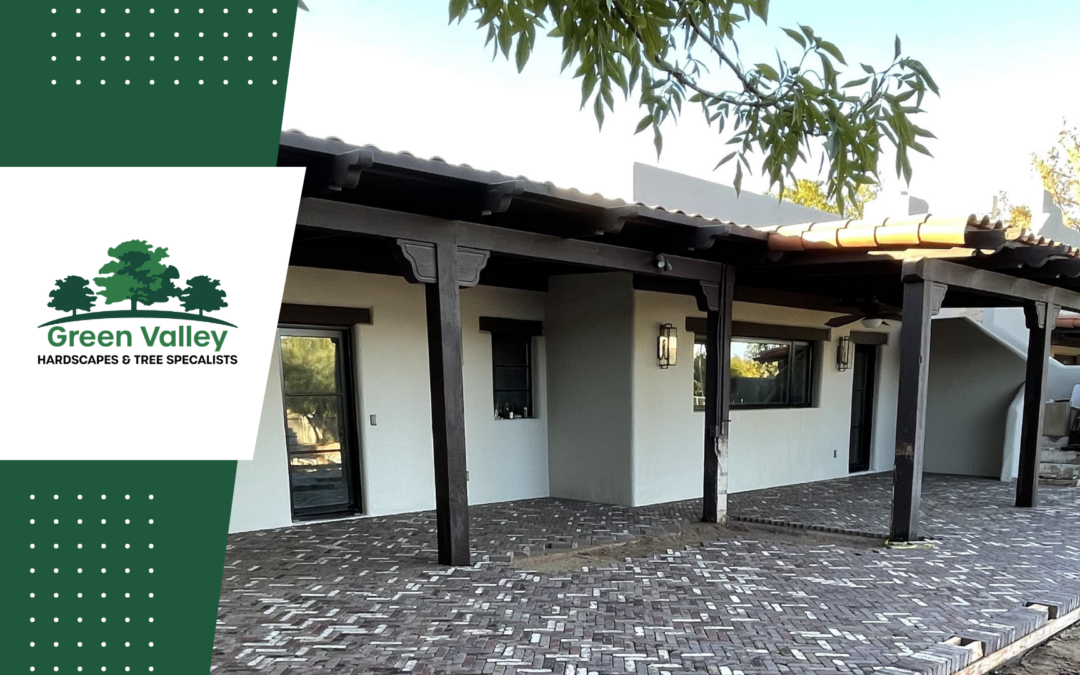
Hardscaping transforms barren desert yards into functional outdoor living areas through permanent structures like patios, walkways, retaining walls, pool decks, and outdoor kitchens. In Glendale, Arizona—located in Maricopa County just west of Phoenix—this practice isn’t just about beauty. It’s about survival. With summer temperatures regularly exceeding 100°F (peaking around 106°F in July) and annual rainfall hovering near 9 inches, your hardscape design choices directly affect whether your backyard becomes a livable space or an unusable oven.
As an example of a trusted local provider, MasterAZscapes LLC specializes in hardscapes that Phoenix residents trust for durability, beauty, and construction.
This article focuses on practical, Phoenix–West Valley–specific advice for homeowners interested in creating outdoor spaces that actually work in the Sonoran Desert climate.
What you’ll learn:
-
How hardscapes function differently in desert landscaping versus other climates
-
Specific design ideas suited to Glendale’s heat, monsoons, and HOA environments
-
Material comparisons with real cost ranges and durability factors
-
Permit requirements and HOA navigation strategies
-
Seasonal maintenance to keep your investment looking sharp for decades
What Are Hardscapes in Desert Landscaping?
Hardscape refers to the permanent, non-living structural elements of an outdoor space, such as patios, walkways, retaining walls, and decks.
In landscaping terms, “hardscape” refers to the non-living, structural elements of your yard—everything that isn’t plants, soil, or turf. Hardscape is non-living and durable, while softscape consists of living, changing elements like plants. While softscape components like trees, shrubs, and ground cover bring life and color, hardscapes provide the bones of your outdoor space. Hardscape structures maintain their beauty and structure year-round, unlike softscape that may die or go dormant in winter.
In Glendale yards, hardscapes typically dominate because they require no irrigation and can handle extreme conditions that would kill lawns within weeks. Common hardscape features you’ll find across the city include:
-
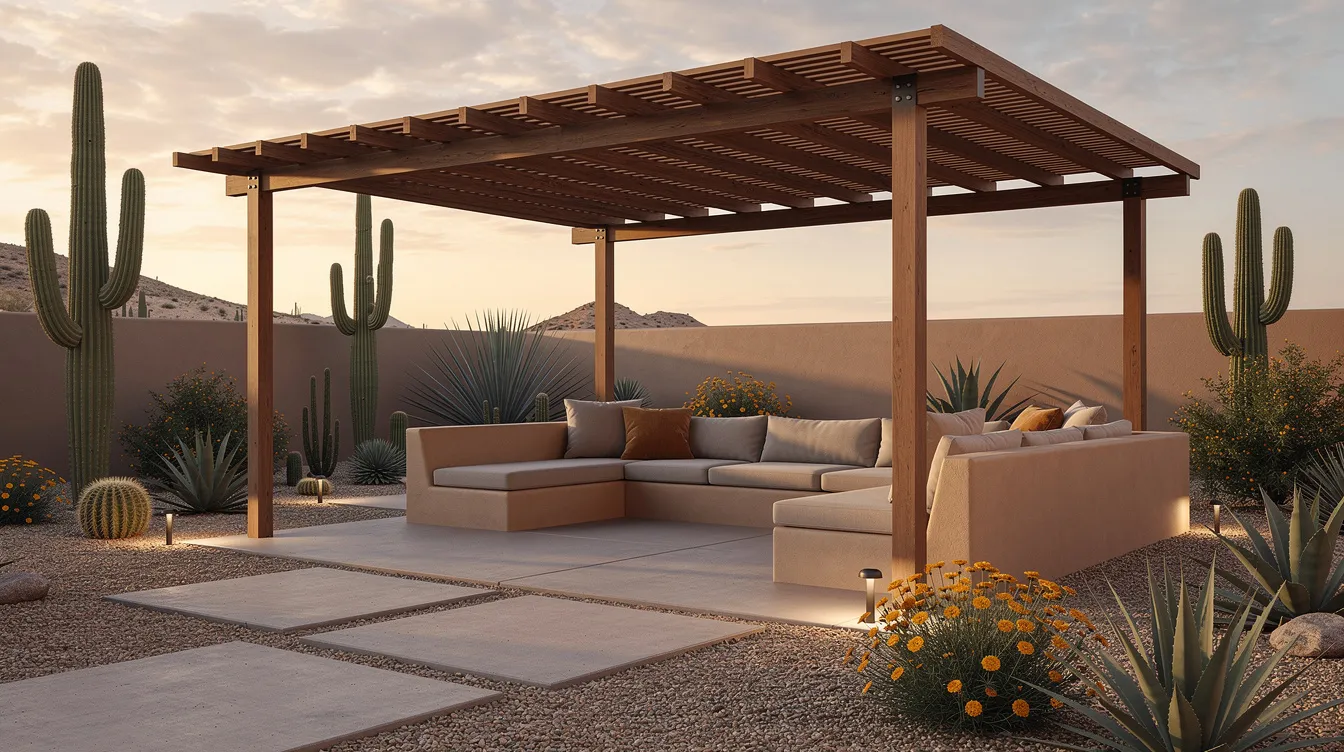
Covered patios with ramadas or pergolas oriented to block afternoon sun
-
Paver driveways in interlocking patterns designed for vehicle weight and UV exposure
-
Travertine pool decks that remain barefoot-friendly even when surface temperatures elsewhere hit 140°F
-
Decomposed granite walkways stabilized with polymers for permeability
-
Block retaining walls using concrete masonry units for sloped properties
-
Built-in seating walls integrated with fire pits for cooler months
For example, resurfacing concrete floors, placing pavers, masonry, travertine tile, and flagstone are all considered hardscape elements. Professional designers consider hardscape as the framework of the landscape, while softscape adds visual appeal and softness. Hardscapes do not require watering, fertilizing, mowing, or pruning, reducing upkeep compared to traditional landscapes. Hardscapes help protect plants by preventing damage to root structures and reducing soil contamination. Hardscapes can provide much needed outdoor space for entertaining and help protect plants.
These elements create what designers call “outdoor rooms”—defined zones for dining, grilling, lounging, and entertaining. In Glendale’s climate, that means using your backyard during early morning hours and evening gatherings in summer, then shifting to mid-day enjoyment during the pleasant winter months when temperatures average 65-75°F.
The practice of combining hardscapes with xeriscaping—low-water native plants like agave, cactus, and palo verde under drip irrigation—has become the standard template for water-conscious Glendale homeowners.
Well-planned hardscapes also manage drainage during monsoon storms from July through September. When those intense rains arrive, crowned surfaces, French drains, and permeable pavers prevent foundation damage and erosion on the caliche-heavy soil common throughout the region.
Benefits of Hardscaping in Glendale’s Climate
Glendale’s hot, sunny weather and hard, alkaline soils make traditional grass lawns nearly impossible to maintain without excessive water use. Hardscaping offers a practical alternative that works with the desert instead of fighting against it.
Functional Benefits
The most immediate benefit is expanded usable outdoor space. Adding interior square footage to your house can cost $200-300 per square foot in construction expenses. Hardscape additions typically run $10-50 per square foot—a fraction of the price for functional living area.
Specific functional advantages include:
-
Defined zones for dining, grilling, and entertaining (particularly valuable for game-day event hosting near State Farm Stadium)
-
Non-slip pool surrounds critical for families—textured travertine or porcelain reduces slip coefficients below 0.6 per ASTM standards
-
Accessible paths for aging-in-place residents, important as Glendale’s population continues to age
-
Shaded patio areas that drop perceived temperatures by 20°F or more when combined with misting systems
Environmental and Practical Benefits
From a conservation standpoint, hardscapes reduce water consumption by 50-75% compared to maintaining grass lawns that require 1-2 inches of irrigation weekly. In a town where residential landscaping can account for up to 70% of your water bill, that translates to real monthly savings.
Other practical advantages:
-
Less dust during high-wind days (common in spring and during monsoon season)
-
No mud tracked into your house after rains
-
Near-zero maintenance compared to lawn care
-
Better runoff control during 1-3 inch monsoon events that cause 80% of local flood damage
Real Estate Value
Updated hardscapes can increase listing prices by 5-10% in Glendale’s competitive market. Studies from the National Association of Realtors indicate outdoor improvements like patios yield 50-70% ROI in hot markets across the nation, including the Phoenix metro area. Communities like Arrowhead Ranch, Arrowhead Lakes, and Westgate-adjacent neighborhoods see particular buyer interest in move-in-ready outdoor spaces.
Popular Hardscape Ideas for Glendale Backyards
Glendale homeowners increasingly remodel outdoor spaces rather than adding interior square footage. With median home sizes of 2,000-2,500 sq ft and limited lot sizes, expanding outward makes more financial sense than building up or out.
Here are the most popular hardscape features serving Glendale backyards, each suited to desert conditions:
Covered or Pergola-Style Patios
Shade structures oriented east-west block the brutal afternoon sun and reduce masonry heat gain by up to 40%. Aluminum ramadas and fabric shades extend your patio’s usability from early morning through evening, turning previously unusable hours into comfortable outdoor time.
Travertine or Porcelain Paver Pool Decks
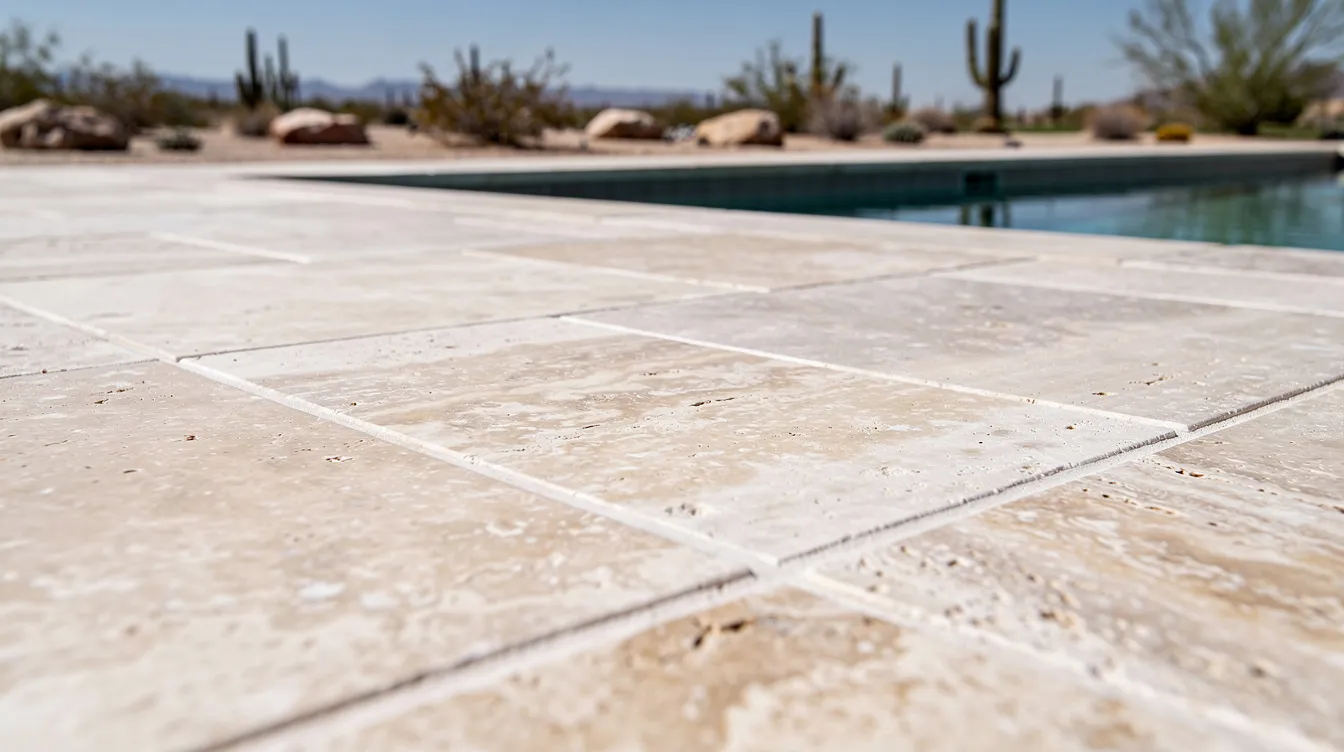
These materials stay 20-30°F cooler than standard concrete due to their thermal mass properties. Porcelain pavers with cool-touch technology reflect 50% of the near-infrared spectrum, keeping the surface under 120°F even in direct sun. Your family can walk barefoot without the dance-across-hot-coals experience.
Concrete Paver Driveways
Interlocking pavers handle 6,000+ PSI vehicle loads and resist UV fading that destroys lesser materials. Stamped in flagstone or other decorative patterns, they add curb appeal while polymer sand joints prevent weed growth. Quality pavers maintain consistency in color and texture across decades of Arizona sun.
Built-In Gas Fire Pits
With propane lines providing 50,000 BTU output, these features warm November through February nights when temperatures drop to average lows of 45°F. Unlike open wood fires (risky in dry desert conditions), gas features offer controlled heat without fire danger.
Outdoor Kitchens
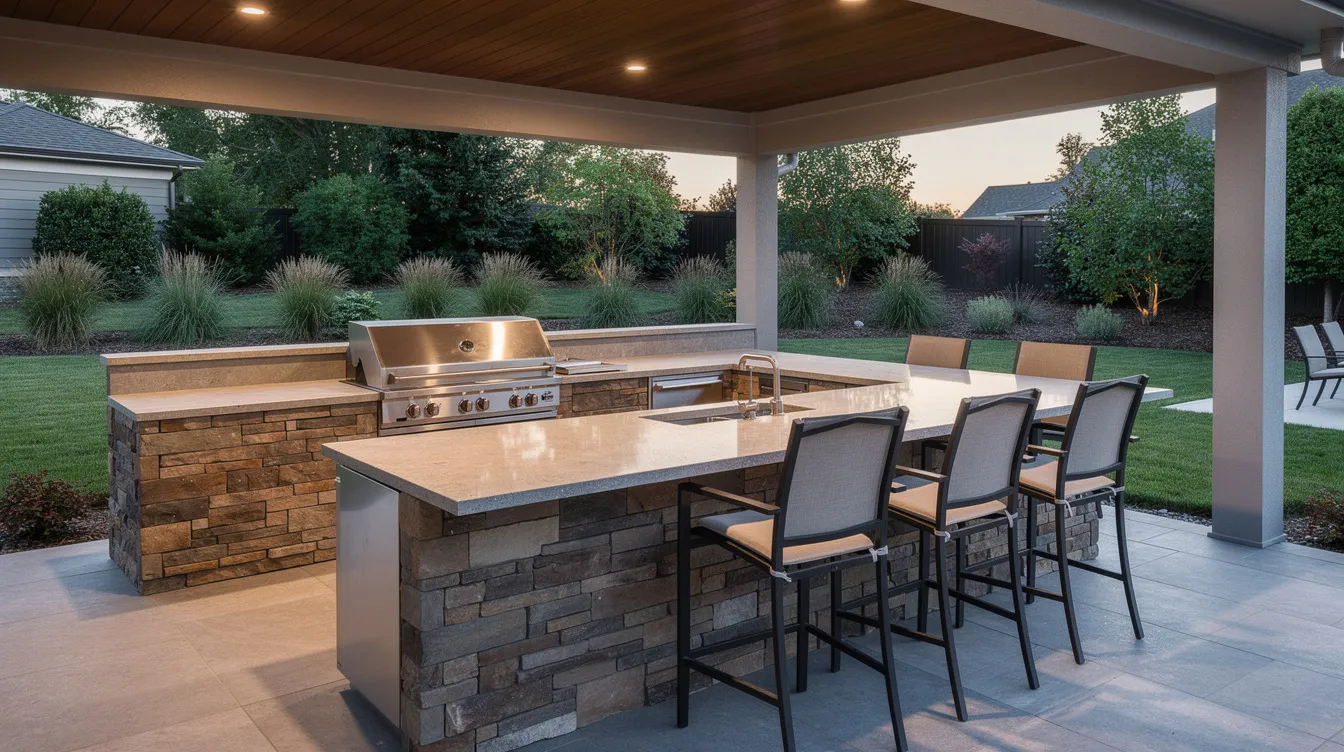
Insulated stainless grills, refrigerators, and quartz counters create ideal setups for 10-20 person gatherings. Located just miles from State Farm Stadium, dozens of Glendale homeowners have built outdoor kitchens specifically for football season entertaining.
Low-Voltage LED Lighting
Path lights and wall-mounted fixtures at 12-24V with dusk-to-dawn timers illuminate walkways during 14-hour summer nights. Beyond beauty, proper lighting enhances safety—relevant both for navigating your space and deterring the coyotes common throughout the West Valley.
Retaining Walls and Raised Planters
Tiered walls up to 4-6 ft high with geogrid reinforcement manage sloped terrains near areas like Thunderbird Conservation Park. These structures can incorporate raised planters for drought-tolerant herbs and native plants, adding organic textures to your hardscape design.
Water Features
While large ponds require significant maintenance in dusty conditions, contained water features like recirculating fountains add ambient sound without excessive evaporation. Properly designed, these features integrate with your overall drainage plan.
Choosing Materials that Perform in Glendale Heat
Materials in Glendale must handle extreme sun exposure (UV index 11+, over 4,000 annual sunshine hours), day-night temperature swings of up to 40°F, and occasional haboob dust storms with winds reaching 50-60 mph. As an example, Hardscape.com offers a robust collection of wood and natural stone pavers for outdoor spaces, providing options that are well-suited for these challenging conditions. Here’s how the main categories compare:
Concrete Pavers
Cost: $4-12 per square foot
Modular interlocking units (typically 60-80mm thick) offer flexibility for driveways and patios. Available in earth tones that match Sonoran Desert palettes, they’re sealed with silane-siloxane penetrating sealers that remain stable for 5-7 years.
Pros: Versatile, repairable (individual units can be replaced), handles thermal expansion well
Cons: Joint sand requires periodic refreshing, darker colors absorb significant heat
Natural Stone (Travertine, Flagstone)
Cost: Travertine $8-20 per sq ft; Flagstone $10-25 per sq ft
Travertine (honed or tumbled) provides upscale thermal inertia—it cools faster at night than concrete alternatives. Flagstone offers natural slip resistance (coefficient 0.7+ when wet) and irregular patterns for rustic aesthetics.
Pros: Beautiful, naturally cool, high-end appearance
Cons: Requires annual sealing to prevent spalling, more labor-intensive installation
Porcelain Pavers
Cost: $10-18 per square foot (20mm thick)
These mimic natural stone appearance with superior performance. With only 0.4% water absorption versus travertine’s 2-3%, porcelain resists staining and stays under 120°F in direct sun. The through-body coloring means scratches don’t show different colors beneath the surface.
Pros: Low maintenance, stain-proof, modern aesthetic
Cons: Higher upfront cost, may feel less “authentic” than natural stone
Stamped Concrete
Cost: $8-15 per square foot
Budget-friendly for covering large areas with 4,000 PSI compressive strength and customizable textures. Control joints every 10-15 feet prevent thermal expansion cracking.
Pros: Cost-effective, customizable patterns
Cons: Can crack if not properly jointed, requires resealing, shows wear over time
Decorative Gravels and Decomposed Granite
Cost: $2-5 per square foot
Permeable alternatives compacted to 95% Proctor density for stability under foot traffic. DG works well for paths and as lawn replacement throughout the yard.
Pros: Most affordable, fully permeable, easy to refresh
Cons: Migrates over time, not suitable for high-traffic vehicle areas, requires edging to contain
Color and Surface Considerations
Light-colored materials (reflectivity above 0.4 SR) reduce surface heat by up to 30°F compared to dark alternatives. However, some HOAs in Glendale subdivisions—roughly 60% of developments have color restrictions—limit your palette choices. Check community guidelines before finalizing material selections.
For pool deck and decking areas, ensure materials meet R11-rated non-slip requirements per building codes. UV-stable acrylic sealers prevent efflorescence from caliche salts, a common issue in Arizona soils.
Planning, Permits, and HOA Rules in Glendale
Thoughtful planning prevents costly rework and HOA disputes that can add 20-30% to your project budget. Before breaking ground, address these critical steps, including checking with the elected city council for any required permits or local regulations.
Initial Planning Steps
Start by measuring your yard and mapping sun patterns throughout the day. Use smartphone apps that track solar azimuth to identify optimal shade structure orientation—southeast-facing patios capture pleasant morning sun while blocking harsh afternoon exposure.
Identify views you want to highlight (mountain vistas, mature trees) and views you want to block (two-story neighbor windows, commercial properties). Even homeowners near Phoenix Sky Harbor International Airport have found creative ways to screen unwanted sightlines while opening desirable ones.
Drainage Requirements
Maricopa County drainage codes require a minimum 2% slope away from your house foundation. You cannot direct concentrated water flow onto adjacent properties under nuisance ordinances. Permeable surfaces are encouraged for handling 1.5-inch-per-hour storm events common during monsoon season.
Plan your drainage before finalizing any hardscape layout. Fixing drainage problems after construction is far more expensive than designing for proper flow from the start.
Permit Triggers
Not every project requires permits, but these common features do:
-
Retaining walls over 3 feet: Require engineered plans per IBC 1807.2
-
Gas appliances: Fire pits and outdoor kitchens need APS utility approval
-
Electrical circuits over 15A or trenching less than 24 inches deep: Underground fault protection required
Permit fees typically run $500-2,000 depending on scope. While some homeowners skip permits for smaller projects, unpermitted work can create serious problems when you sell your house.
Utility Location
Call 811 at least 48-72 hours before any digging. This free service locates underground utilities and prevents the 30% of strikes that occur nationwide from careless excavation. It’s not just helpful—it’s legally required.
HOA Compliance
Approximately 70% of Glendale developments have HOA requirements for hardscape modifications. Communities like Arrowhead mandate Architectural Review Committee (ARC) pre-approval for:
-
Front-yard grass-to-gravel conversions
-
New structures visible from streets
-
Material and color changes that affect community aesthetics
Submit scaled sketches (1/4” = 1’ is standard) with your application. Previous experience with your specific ARC helps you understand what they’ll approve—ask neighbors about their process before scheduling your appointment.
Key compliance steps:
-
Check permit requirements with the city
-
Submit HOA applications before ordering materials
-
Call 811 to locate utilities
-
Plan drainage to code specifications
The Glendale city council and local businesses involved in construction services can provide additional guidance for complex projects.
Transportation and Accessibility: Proximity to the International Airport
Phoenix’s strategic location near the Phoenix Sky Harbor International Airport—one of the busiest in the nation—has shaped the city into a vibrant hub for both residents and businesses. With tens of thousands of travelers arriving and departing daily, the city’s accessibility is a major draw for new homeowners, entrepreneurs, and visitors alike. The international airport not only connects Phoenix to destinations across the country and globe, but also fuels local growth, making the city a magnet for commerce, events, and cultural exchange.
Recognizing the importance of connectivity, the city council has invested in expanding transportation infrastructure, from the light rail system to new roads and highways. These improvements make it easier than ever to navigate Phoenix, whether you’re commuting to work, welcoming guests, or heading out to explore the city’s many attractions. For homeowners, this accessibility means more than just convenience—it enhances property values and supports a dynamic lifestyle where work, play, and travel are all within easy reach.
This spirit of accessibility extends to the way Phoenix residents approach their homes and outdoor spaces. With the city’s hardscaping and landscaping services, it’s possible to create beautiful, functional environments that reflect both the natural beauty of Arizona and the practical needs of modern life. Whether you’re designing a backyard patio for relaxing evenings, a pool deck for family gatherings, or a driveway that stands up to daily use, local contractors bring a wealth of knowledge to every project. They understand the unique challenges of Arizona soil, the importance of proper drainage, and the value of using quality materials like pavers, concrete, and flagstone to ensure durability and beauty for decades.
Structures such as retaining walls, pergolas, and custom edging not only add visual appeal but also serve practical purposes—managing slopes, creating shade, and defining outdoor rooms. The process typically begins with a consultation, where knowledgeable professionals help homeowners design spaces that suit their needs, match their style, and fit their budget. From there, construction moves forward with careful attention to detail, ensuring that every element—from decking to lighting—contributes to a cohesive, inviting space.
Phoenix’s commitment to quality isn’t limited to private homes. Throughout the city, businesses and public spaces showcase thoughtful landscaping and hardscaping, creating welcoming environments for residents and visitors. Dozens of parks, recreational areas, and commercial centers feature expertly crafted patios, walkways, and gathering spaces, all designed to make the most of the city’s sunny climate and desert scenery.
For those looking to manage their projects or city-related needs, Phoenix offers a range of practical services online. Residents can pay bills, schedule appointments, and access a wealth of information about classes, events, and city services through the official phx website. This focus on accessibility and convenience is part of what makes life in Phoenix both enjoyable and efficient.
As Phoenix continues to grow, the proximity to the international airport and the city’s ongoing investment in transportation and infrastructure will remain key advantages. Whether you’re creating a new outdoor space, launching a business, or simply enjoying all that the city has to offer, Phoenix’s blend of accessibility, beauty, and quality of life ensures it remains one of Arizona’s most desirable places to live and work.
Maintenance and Longevity in the Sonoran Desert
Well-built hardscapes can last decades in Glendale’s dry climate, but they require proactive maintenance against sun damage, dust accumulation, and occasional flooding.
Seasonal Maintenance Schedule
Spring (March-May)
-
Inspect for cracks and settlement after winter rains
-
Check paver joints for failed polymeric sand (resand if coverage drops below 95%)
-
Clean mineral deposits from hard water (Glendale water runs 250+ ppm alkalinity)
-
Test irrigation connections for any softscape elements
Summer (June-September)
-
Reapply sealers every 2-3 years (siloxane for natural stone, acrylic for concrete)
-
Pressure wash at 1,500-2,000 PSI without abrasives to avoid etching
-
Monitor for UV fading on stamped concrete
-
Clean dust buildup before it bonds to surfaces
Fall (October-November)
-
Clear debris from drainage channels before monsoon runoff paths harden
-
Refresh decomposed granite to 4-inch depth where it has migrated
-
Check retaining wall weep holes (one 1/8-inch hole per 32 sq ft minimum)
-
Schedule contractor appointments for any needed repairs
Winter (December-February)
-
Ideal season for new concrete pours—50-70°F nights optimize 28-day cure
-
Complete repairs and upgrades when temperatures suit mortar and sealant application
-
Plan spring projects while enjoying your outdoor space during pleasant days
Material-Specific Care
|
Material |
Key Maintenance |
Frequency |
|---|---|---|
|
Travertine |
pH-neutral cleaners, resealing |
Biannually |
|
Concrete pavers |
Joint sand refresh, weed prevention |
After monsoons/haboobs |
|
Stamped concrete |
Resealing, crack repair |
Every 2-3 years |
|
Retaining walls |
Weep hole clearing, structural inspection |
Quarterly |
|
DG paths |
Re-compaction, edge maintenance |
As needed |
Haboob Recovery
After dust storms—those dramatic walls of dust that can deposit 1-2 inches of silt across your yard—rinse surfaces within 24 hours. Alkaline dust (pH 9+) bonds quickly and causes staining if left to sit. A quick hose-down prevents most long-term damage.
Cost Comparison
Annual maintenance costs run approximately $0.10-0.50 per square foot for hardscapes versus $1-2 per square foot for lawn care. Over a 20-year life span, the savings become substantial—and you’ll pay far less on your water bill each month.
Working with a Glendale Hardscaping Professional
While smaller projects suit DIY approaches, professional help becomes valuable for load-bearing structures, drainage design, gas and electrical features, and navigating HOA and permit requirements. A knowledgeable contractor brings wealth of experience that prevents costly mistakes.
What to Look For
Licensing and Insurance
Verify the contractor holds a current ROC (Arizona Registrar of Contractors) license. Confirm they carry $1M+ liability insurance. Arizona has roughly a 15% contractor failure rate statewide—proper licensing protects you if problems arise.
Local Experience
Ask for references from neighborhoods similar to yours—Arrowhead Lakes, Westgate-adjacent communities, or areas near Thunderbird Conservation Park. A team with desert experience understands soil conditions, drainage challenges, and material performance that contractors from other regions might miss.
John, a homeowner in Arrowhead Ranch, learned this lesson when his first contractor—recently arrived from a different state—failed to account for caliche soil conditions. His wife noticed settlement within six months. The second contractor, with 15 years serving the Phoenix metro, properly addressed the base preparation.
Portfolio Quality
Review completed projects that match your vision. Look for consistency in craftsmanship and attention to detail. Ask specifically about durability over time—how do their 5-year-old installations look today?
Proposal Details
A quality proposal should specify:
-
Exact materials with brand names and color selections
-
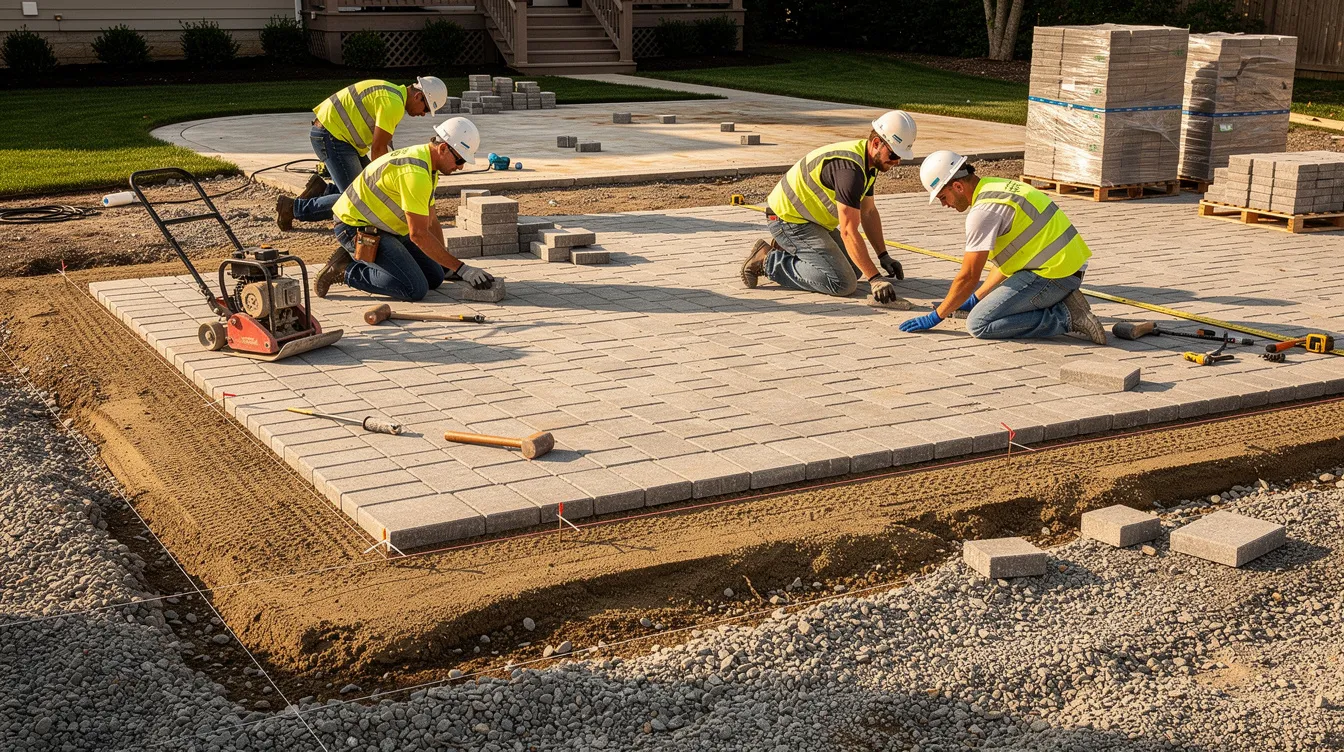
Base preparation depths (4-6 inch gravel compacted to 98% for pavers)
-
Drainage systems (weep holes, French drains, grading percentages)
-
Warranty terms (10-25 years structural, 5 years materials is standard)
-
Timeline with realistic schedules (expect 3-5 days for patios, 2-4 weeks for full outdoor kitchens)
-
Monsoon-proofing methods (fibermesh reinforcement, reinforced edges)
Getting Bids
Collect 3-5 bids for any significant project. The lowest price rarely indicates the best value—prioritize long-term durability and proper construction methods. Ask each contractor about their approach to:
-
Compacted base preparation
-
Monsoon-resistant edge treatments
-
Material sourcing (local suppliers often provide bulk discounts)
-
Crew experience with similar projects
Bringing Your Glendale Hardscape Vision to Life
Transforming a basic desert yard into comfortable, usable outdoor space isn’t impossible—it just requires understanding what works in Glendale’s unique climate. Design for heat, conserve water, manage drainage, and create outdoor living areas that extend your home’s functional square footage without the cost of interior construction.
Start with one defined project. Maybe that’s a shaded paver patio where you can sit with coffee before the day heats up. Perhaps it’s a new pool deck that doesn’t burn feet. Or an outdoor kitchen for hosting friends during football season. Phase additional features over time as budget allows and as you learn what suits your life.
Next steps for homeowners:
-
Create a wish list (shade, seating, cooking, play area, pets) and match each wish to specific hardscape features
-
Measure your space and sketch rough layouts before contacting contractors
-
Research HOA requirements early—don’t fall in love with a design that won’t get approved
-
Schedule consultations during winter or early spring when contractors have more availability
Your Glendale backyard has the potential to become the most-used room in your house. With smart hardscaping choices, it will work with the Sonoran Desert climate rather than fighting against it—beautiful, functional, and built to last.