If you live in Arizona and you’ve been searching for hardscaping near me, you’re probably staring at a yard full of rocks and dirt, imagining what it could be. A paver patio for weekend dinners. A travertine pool deck that doesn’t burn your feet. Maybe a fire pit where the family gathers on cool December evenings. This article walks you through everything you need to know to turn that vision into reality, from choosing the right materials and patterns for a desert climate to finding a licensed contractor, understanding costs, and keeping your finished hardscape looking great for years.
Key Takeaways
-
Homeowners in Arizona can find quality hardscaping near me professionals by verifying ROC licensing, reading recent reviews, and requesting before/after portfolios of desert-specific projects. Have your budget, yard measurements, and reference photos ready before your first consultation.
-
Pavers and travertine are especially well-suited to hot, dry desert climates. Travertine stays noticeably cooler underfoot than standard concrete in 100°F+ summers, while concrete pavers offer design flexibility, durability, and easy repair.
-
Hardscaping services like patios, retaining walls, outdoor kitchens, fire pits, and water features can transform a bare yard into a low-maintenance outdoor living space that increases property value and extends your usable square footage.
-
Combining pavers with artificial turf, desert-friendly plants, and lighting delivers a modern, functional yard with minimal watering and upkeep, ideal under current and future drought restrictions.
-
This article focuses on Southwest style with concrete examples of design patterns, materials, and costs drawn from the Phoenix, Scottsdale, Mesa, Tucson, and Las Vegas markets.
What “Hardscaping Near Me” Actually Means (and Why It Matters in the Southwest)
Hardscaping covers every non-living, structural element in your outdoor space. Think pavers, patios, retaining walls, walkways, driveways, outdoor kitchens, fire pits, pergolas, and water features. Common hardscaping materials include stone, brick, concrete, and pavers, and hardscaping contractors design and install these permanent structural elements outdoors. If it’s not a plant, a tree, or soil, it’s probably hardscape.
When you search “hardscaping near me” in the Southwest, you’re looking for local pros in desert communities like Phoenix, Scottsdale, Tucson, Mesa, Glendale, Henderson, and Las Vegas. Local expertise matters here more than in most regions. When summer temps hit 110°F or higher, materials expand and contract daily. Monsoon rains dump water fast, and desert soils like caliche and decomposed granite behave differently than clay or loam in wetter climates. A contractor from the Midwest won’t instinctively know how to handle these conditions.
Look for hardscaping contractors who specifically advertise experience with desert soils, decomposed granite bases, and drought-tolerant designs. In Arizona, the relevant license classification is C-21 (Hardscaping and Irrigation Systems), which covers non-loadbearing concrete work, patios, walkways, driveways made of pavers or stone, decorative garden walls up to six feet, and retaining walls up to three feet above lower elevation.
How to Quickly Find Quality Hardscaping Services Near You
Finding the right team starts with smart searching and thorough vetting. Local contractors handle both residential and commercial hardscaping projects, so look for firms with residential portfolios that match your scope. Hardscaping services include patios, walkways, and retaining walls, but many firms also offer outdoor kitchens, fire features, and full yard remodels.
Here’s a step-by-step checklist:
-
Search with specific local terms. Use queries like “hardscaping near me Phoenix AZ,” “retaining wall contractor Scottsdale,” or “paver patio installer in Mesa.” Generic national searches will surface companies that don’t serve your area.
-
Read 3–5 recent reviews. Check Google, Yelp, and Nextdoor for reviews from 2024–2026, and look for mentions of patios, retaining walls, and outdoor kitchens rather than just lawn mowing or cleanup jobs. Checking online reviews helps assess contractor reliability and satisfaction.
-
Request before/after photos. Reputable contractors provide a portfolio of past work to showcase their experience. Ask to see 400–600 sq ft paver patios, 3–4 ft retaining walls, or complete outdoor kitchen builds.
-
Verify licensing and insurance. Local licensing verification ensures contractors meet required legal standards. In Arizona, check the contractor’s ROC license number on the ROC website and confirm it covers C-21 hardscaping. Verify liability insurance and worker’s comp before signing anything.
-
Get local referrals. Finding reputable contractors can be aided by local referrals from neighbors. Ask people on your street or in your HOA Facebook group who did their patio or retaining wall. Check past client reviews to vet landscaping professionals before you commit.
Planning Your Hardscaping Project Around a Desert Climate
Desert conditions shape every design decision. Here’s what to account for before your hardscaping project begins:
-
Map sun exposure. Between June and August, note which parts of your yard sit in full sun from 11am to 4pm. Those are the zones where travertine pavers stay cooler underfoot than standard concrete. Patios serve as outdoor living spaces for relaxation and entertainment, but they won’t get used if the surface temperature hits 160°F.
-
Design for drainage. Grading and drainage integration is crucial to prevent water pooling around foundations. During Arizona’s monsoon season (July through September), sudden downpours can overwhelm flat surfaces. Design patios to slope 1–2% away from the house and toward drains or gravel swales. Professional grading and drainage protect foundations during hardscaping projects.
-
Build a low-water yard. Combine hardscape surfaces (pavers, gravel, retaining walls) with artificial turf strips and drip-irrigated desert plants like agave, yucca, lantana, and desert spoon. This approach slashes water use while keeping the yard attractive and functional.
-
Check HOA rules early. Many Southwest HOAs limit wall height, restrict front-yard turf, or regulate visible water features and fire pits. Confirm these constraints before your final design to avoid rework and wasted budget.
Why Pavers Are a Go-To Choice for Arizona Hardscapes
Concrete pavers dominate Southwest patios, driveways, and walkways for good reason. They handle the unique demands of desert living better than most alternatives.
Performance benefits:
-
Pavers flex slightly with soil movement rather than cracking like poured concrete slabs. This matters in expansive desert soils that shift with heat and moisture.
-
They survive extreme heat and occasional freezing nights at higher elevations.
-
Individual pavers can be lifted and reset if settling occurs, making repairs simple without tearing up the entire surface.
-
Walkways and pathways built with pavers guide foot traffic and protect turf from wear.
-
Paver walkways enhance curb appeal and provide safe access to front doors, side gates, and pool areas.
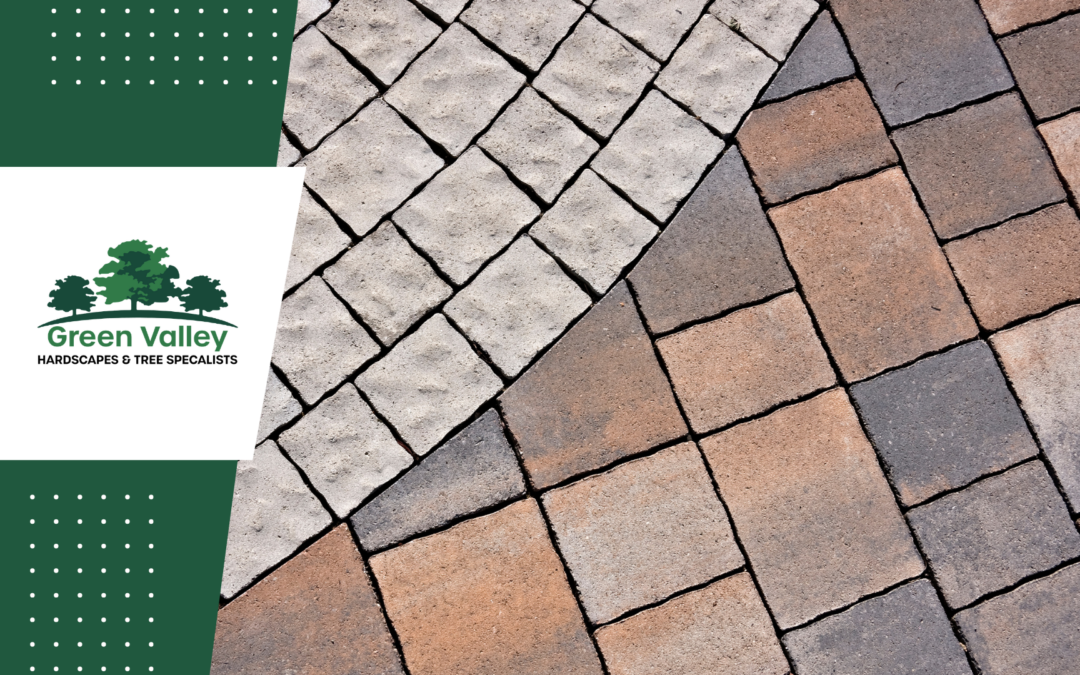
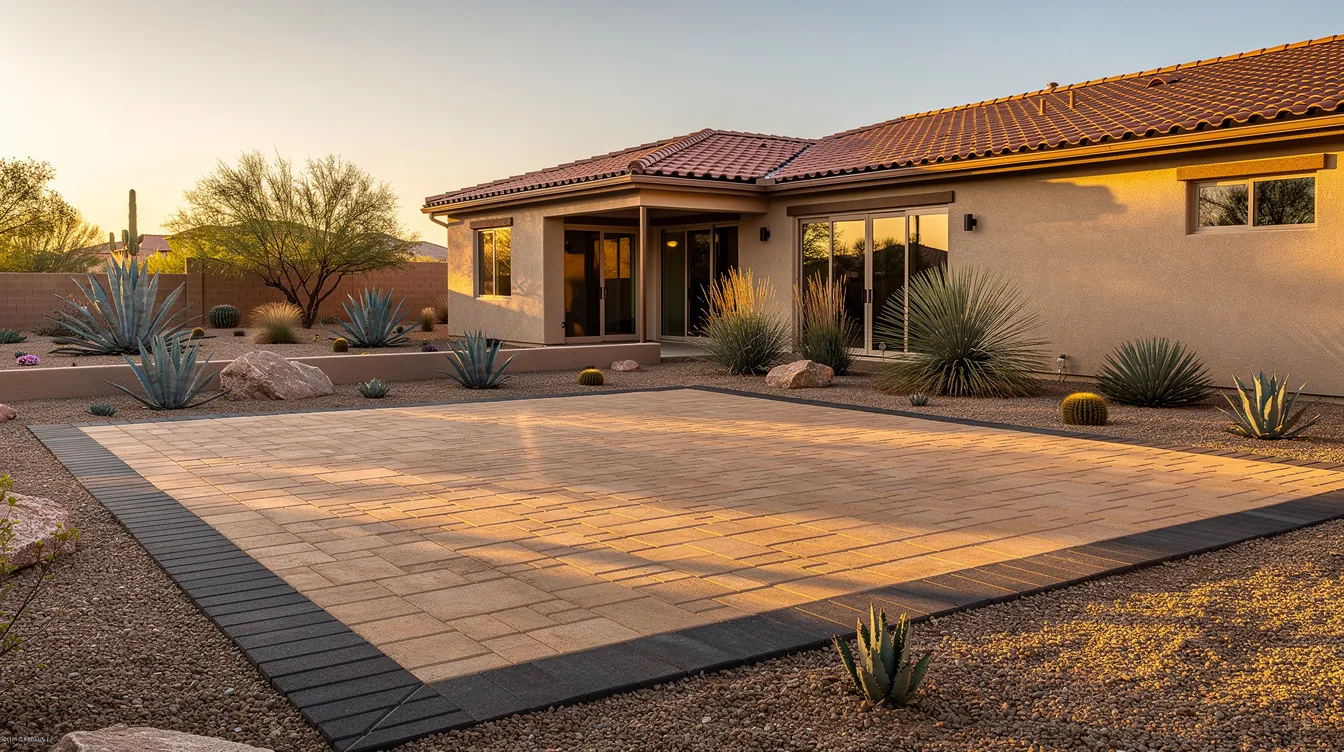
Color versatility: Popular Phoenix-area palettes include tan, adobe, charcoal borders, and “Santa Fe blend” earth tones that match stucco and desert architecture. Light colors reflect more solar radiation, reducing surface temperature.
Common applications: Backyard patios for dining, curved walkways leading to a fire pit, widened paver driveways (which require deep aggregate base preparation for durability), and framed pads for hot tubs or spas.
Travertine Pavers: Why They’re Great for the Desert
Travertine is a premium material, but it’s also one of the most practical choices for hot climates like Phoenix and Tucson. Natural stone materials are more expensive than concrete or gravel, yet travertine earns its price tag in desert performance.
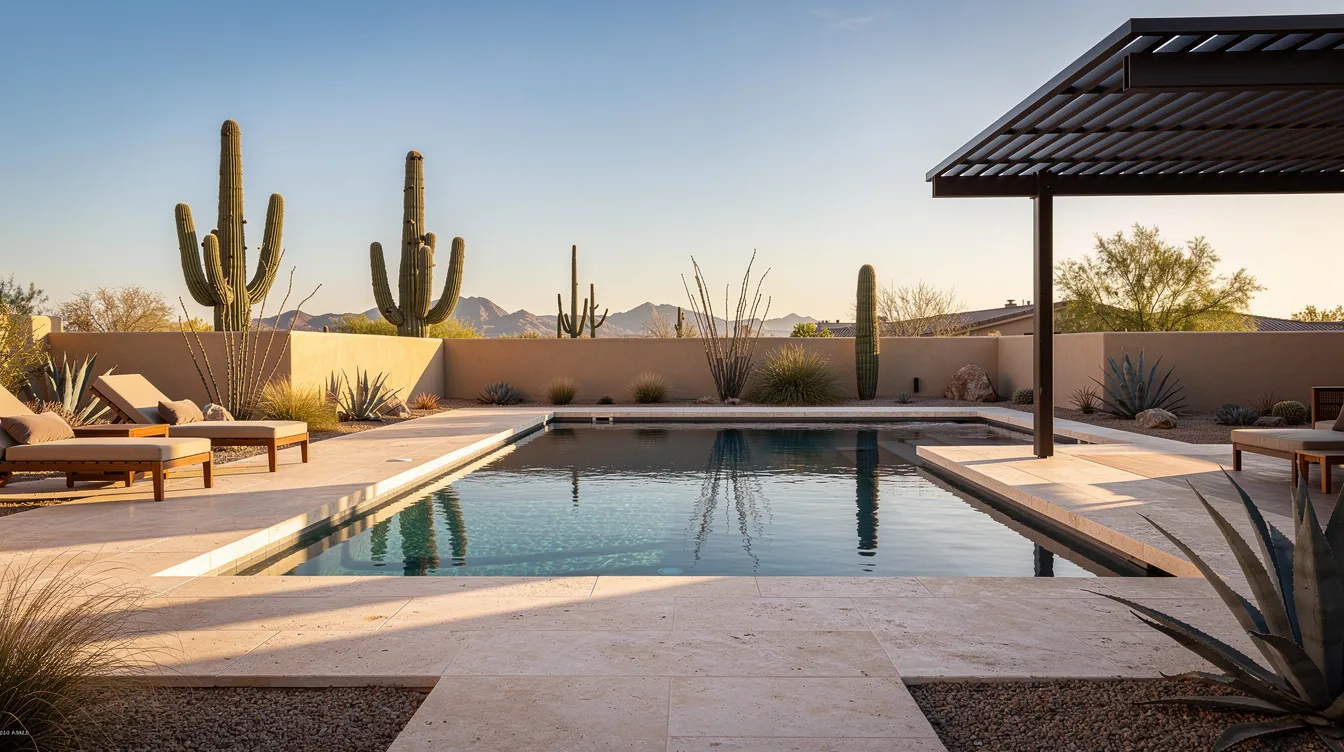
Thermal comfort: Travertine’s natural stone structure has higher solar reflectance (albedo) than standard concrete. Research on natural travertine showed it maintains cooler surface temperatures under direct sun compared with concrete blocks, even concrete with high-albedo paint. In a climate where bare feet on surfaces are unavoidable, this difference is significant.
Slip resistance: When honed or tumbled, travertine provides excellent traction even when wet. This makes it ideal around pools, spas, and water features where kids and adults walk barefoot. The texture grips rather than slicks, unlike smoother concrete or porcelain finishes.
Durability: Dense and long-lasting, travertine handles UV exposure, dust, and heavy monsoon rains without fading the way some dyed concrete pavers can. Seal the surface every 2–3 years to prevent staining from grill grease, sunscreen, and desert tree sap.
Design examples to consider:
-
Ivory travertine pool deck in Scottsdale using a French pattern layout with mixed-size pieces
-
Silver travertine courtyard in Mesa with clean straight-lay joints and a darker stone border
-
Mixed travertine and paver border surrounding a spa area in Tucson, blending natural stone with earth-toned concrete pavers
Popular Hardscaping Patterns and Styles for the Southwest (With Image Ideas)
Pattern choice affects both appearance and structural performance. Here are the most popular options you’ll see across Arizona, Nevada, and New Mexico backyards.
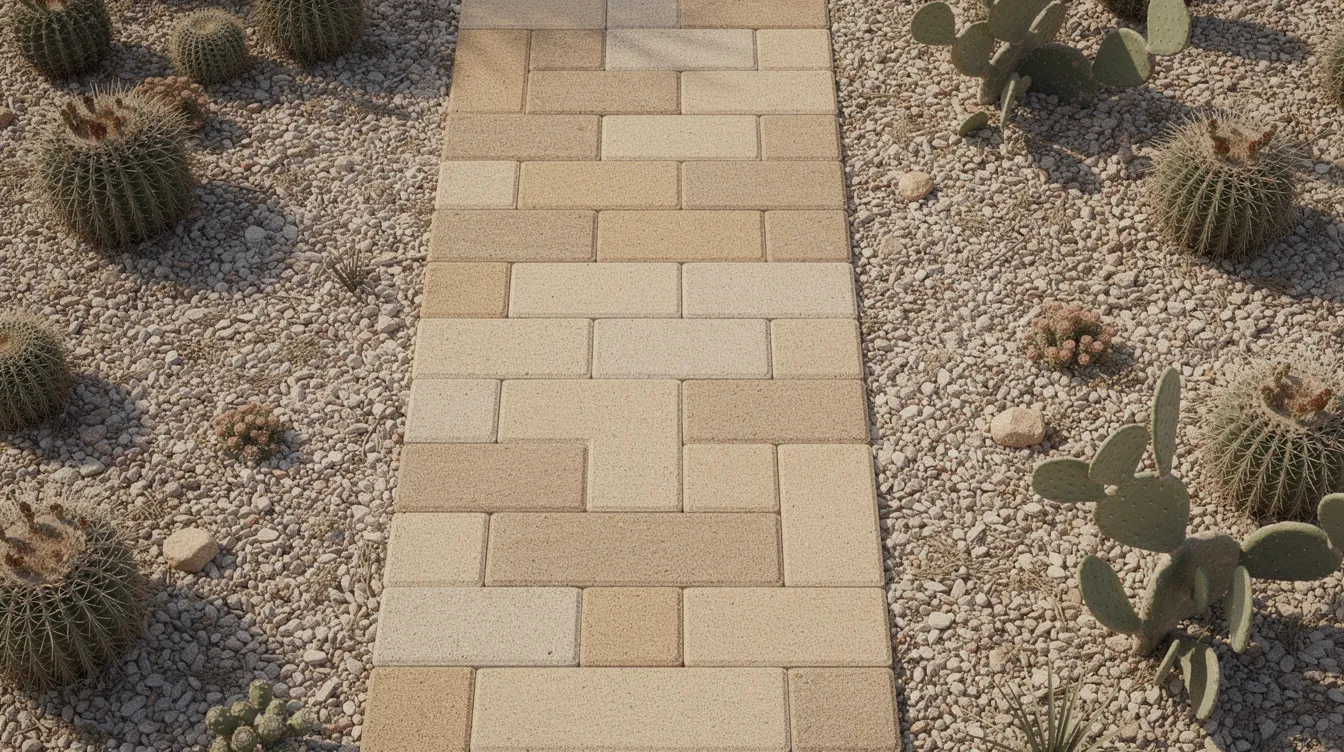
Running Bond
Long, narrow pavers laid in an offset brick pattern. This is the go-to for walkways and side yards in Phoenix subdivisions. It’s clean, simple, and pairs well with soldier-course borders in a contrasting shade. Works best for linear paths and narrow spaces.
Herringbone
Pavers set at 45° or 90° angles in a zigzag interlock. This pattern resists shifting under foot traffic and thermal movement on decomposed granite bases, making it a strong choice for driveways and high-traffic patios. The interlocking geometry distributes weight evenly.
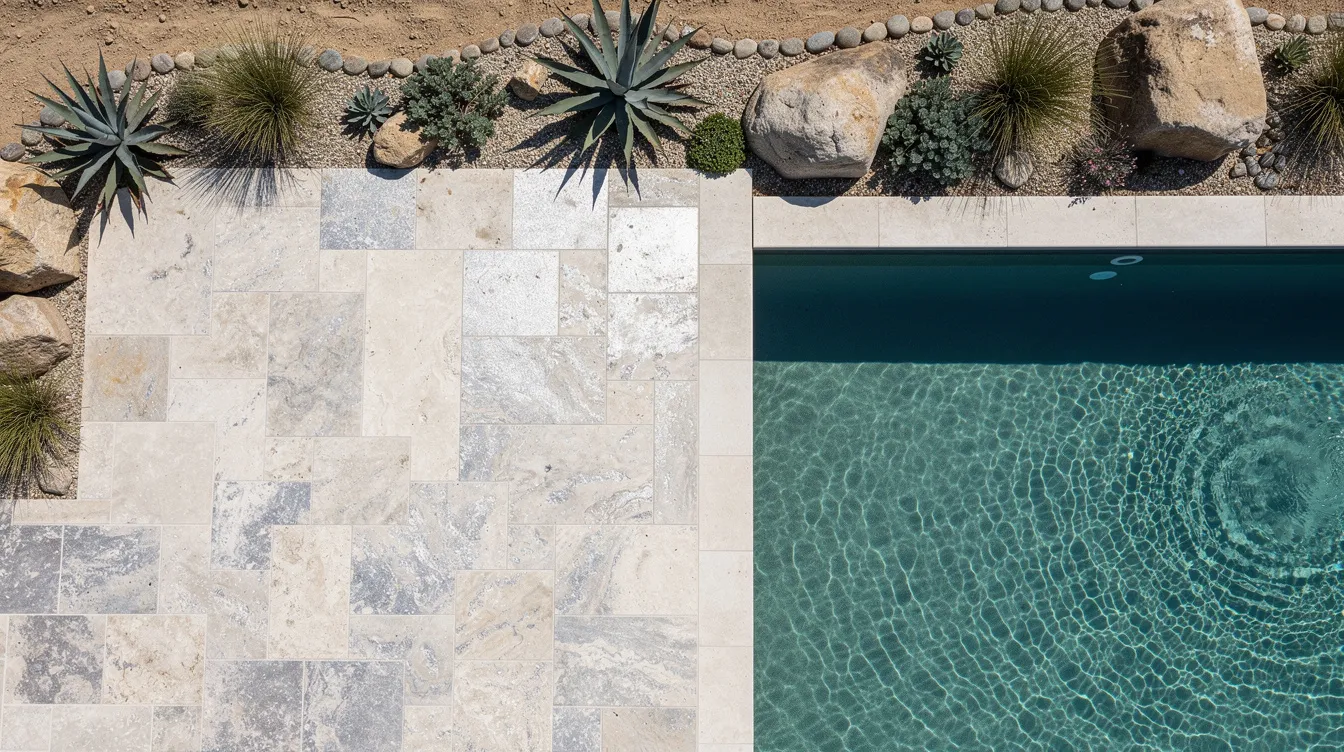
French Pattern (Versailles)
The signature travertine pool deck layout. A French pattern uses four piece sizes-typically 8×8, 8×16, 16×16, and 16×24 inches-arranged in a repeating but seemingly random layout. The result looks sophisticated without being rigid. Pair it with a straight soldier-course border in a slightly darker tone.
Modular 3-Piece and 4-Piece Systems
Manufactured paver systems that use three or four complementary sizes in earth tones. These create large-scale patio surfaces with visual variety. Add a contrasting soldier-course border for a finished look. Popular for 600+ sq ft patios in Chandler, Gilbert, and Surprise.
Pavers With Turf Strips
A modern Southwest look that combines large-format pavers with narrow strips of artificial turf in a checkerboard or grid pattern. This breaks up the hardscape visually, adds a green accent without irrigation, and works well in contemporary Scottsdale and Chandler designs.
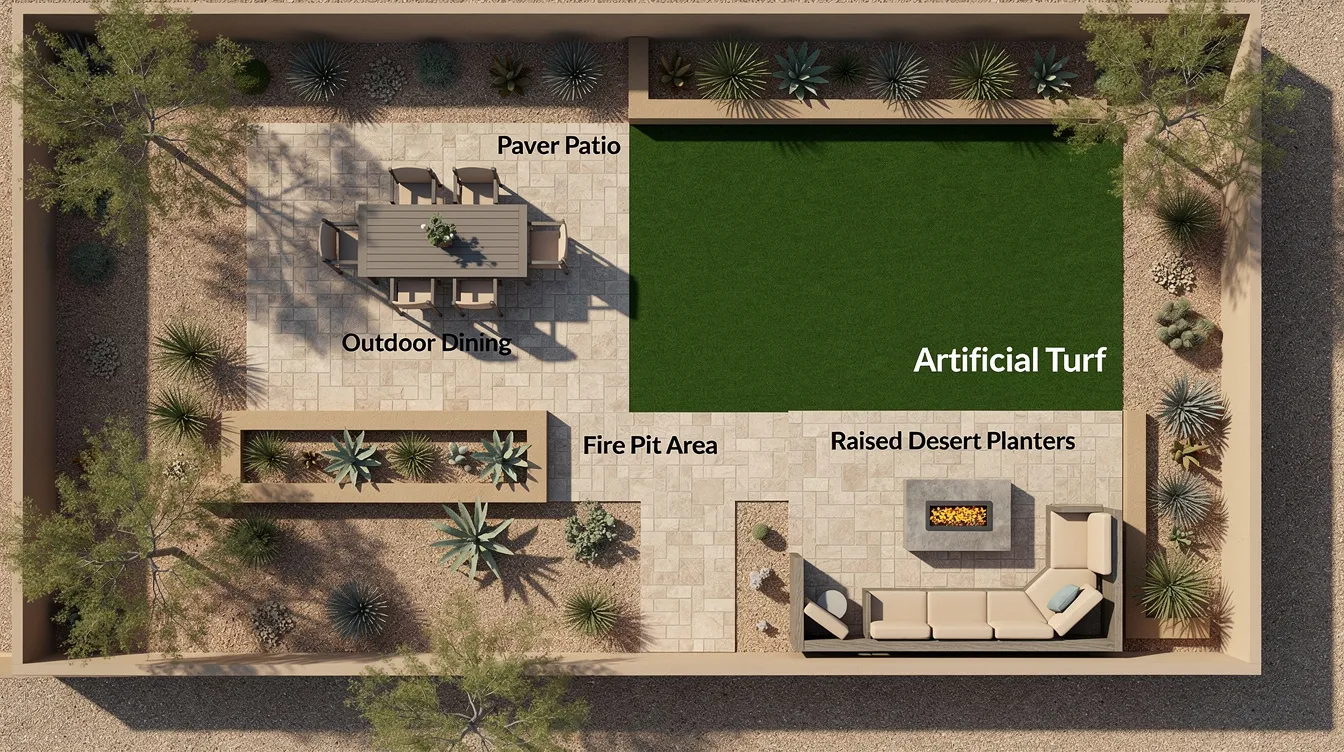
Designing a Complete Outdoor Living Space With Pavers and Turf
The goal is to transform a rock-only yard into a multi-use living space with distinct seating, cooking, and play zones. Hardscaping can increase property value and improve functionality when the design is intentional.
Here’s what a typical 800–1,000 sq ft backyard in Phoenix might look like:
|
Zone |
Size |
Material |
Purpose |
|---|---|---|---|
|
Dining patio |
500 sq ft |
Concrete pavers, herringbone |
Dining table, lounge seating |
|
Turf area |
250 sq ft |
Artificial turf |
Kids’ play, pets, putting green |
|
Planters |
2–3 raised beds |
Matching wall block |
Desert plants, color accents |
|
Fire pit circle |
100 sq ft |
Travertine pad |
Evening gathering |
|
Walkway |
50–100 sq ft |
Running bond pavers |
Access between zones |
Zoning the space: Place the dining area near the house for easy access to the kitchen. Set the fire pit or seating circle farther out for a sense of separation. Position turf in a corner with shade sails or a pergola overhead.
Use curving paver edges or low retaining walls to visually separate turf from gravel and planting beds. This creates definition without harsh transitions and prevents gravel from migrating into turf sections.
Using Artificial Turf as an Accent in Desert Hardscapes
Artificial turf works best as a complement to pavers, not as full-yard coverage. Think accent, not lawn replacement.
Common installations:
-
A 12×20 ft putting green in Scottsdale
-
A narrow turf strip between paver bands for a modern linear look
-
Kid-friendly play areas bordered by travertine or pavers
Addressing heat: Synthetic turf gets hot in full sun during July and August. Pair it with light-colored pavers, shade structures like pergolas or shade sails, and misting systems to keep the space usable on 110°F days.
Water savings: Compared to natural sod, artificial turf eliminates irrigation entirely. Under current and anticipated drought restrictions in Arizona and Nevada, this is a practical long-term decision. No weeding, no mowing, no fertilizer.
Installation details: Proper installation requires a compacted base, drainage layer, quality infill (lighter-colored silica sand runs cooler than dark crumb rubber), and good underlayment. Drainage prevents odor in hot climates, especially in yards with pets.
Retaining Walls: Function, Style, and Erosion Control
Retaining walls serve double duty in the Southwest: they’re both structural solutions and design features. Retaining walls prevent soil erosion and create usable spaces, and they also enhance property value.
Functional uses:
-
Create level terraces for patios, outdoor kitchens, or raised garden beds on sloping lots common in North Phoenix, Fountain Hills, and Paradise Valley
-
Hold back hillside soil on properties with grade changes
-
Prevent soil erosion during monsoon rains and heavy runoff events
Material options:
-
Segmental concrete block (most common, wide color range)
-
Natural stone (flagstone, stacked stone for a rustic look)
-
Stucco-faced masonry to match Spanish and modern desert house exteriors
Engineering considerations: Walls above 3–4 ft typically require permits and possibly structural engineering. Drainage gravel and weep holes behind the wall are non-negotiable during monsoon season. Without proper drainage, hydrostatic pressure can cause wall failure.
A popular design: a 3 ft seat-height retaining wall that doubles as built-in seating around a fire pit, with LED under-cap lighting that creates ambient glow after sunset.
Outdoor Kitchens Built for the Desert
Outdoor kitchens are part of hardscaping installations and are wildly popular in Arizona, where the climate supports outdoor dining and cooking from March through November.
Key components:
-
Built-in gas grill and side burner
-
Storage drawers and a compact outdoor refrigerator
-
A 6–10 ft countertop in UV-resistant materials like quartz, granite, or porcelain
-
Outdoor kitchens can include features like running water and shaded pergolas for maximum comfort
Flooring: Use pavers or travertine as the kitchen zone flooring with a matching or contrasting border to define the area. This ties the cooking space into the overall patio design.
Shade is critical. Integrate aluminum patio covers, wooden pergolas, or shade sails to protect both the cook and the food from mid-day sun. Nobody wants to grill in direct 115°F sunlight.
Fire Pits and Fire Features for Cool Desert Evenings
From October through March, Southwest evenings dip into the low 60s and sometimes the 40s. Fire pits create gathering spaces for friends and family outdoors, extending your usable season by months.
Gas vs. wood-burning:
|
Feature |
Gas Fire Pit |
Wood-Burning |
|---|---|---|
|
HOA friendly |
Usually yes |
Often restricted |
|
Convenience |
Instant on/off |
Requires wood, cleanup |
|
Clearance needed |
Moderate |
More (spark screens required) |
|
Ambiance |
Clean flame |
Crackling, smoke |
Design pairings: Circular paver seating areas with curved seat walls work well for traditional styles. Square modern fire tables on large travertine or porcelain pads suit contemporary designs. Either way, check safety clearances from structures, low-hanging trees, and property lines per your local code in Phoenix or Las Vegas.
Water Features That Work in a Drought-Conscious Region
Small, recirculating water features add sound and movement to a hardscape without significant water waste.
Common desert-appropriate designs:
-
Wall-mounted scuppers spilling into narrow catch basins
-
Urn fountains set on gravel beds with hidden reservoirs
-
Small pondless waterfalls integrated into rock retaining walls
These features recirculate water with pumps and can be combined with paver patios and travertine pool decks. Surround them with desert-friendly plants like red yucca, desert marigold, and boulders to keep the style distinctly Southwestern.
Proper sealing and regular maintenance prevent hard-water mineral buildup and algae, which are common with high-mineral desert water. Expect to clean pumps and basins seasonally.
Lighting Your Hardscape for Evening Use and Safety
Low-voltage LED lighting extends the usability of your outdoor living space well past sunset and adds a layer of safety to steps, walkways, and transitions.
Fixture suggestions:
-
Paver lights embedded at steps and elevation changes
-
Under-cap LED strips on retaining walls and seat walls
-
Path lights along walkways spaced every 6–8 feet
-
Subtle uplighting on saguaros, palo verdes, or desert trees
Color temperature matters. Warm 2700K–3000K bulbs complement desert stone tones and create a relaxed atmosphere. Harsh white 5000K lighting makes everything look clinical and washes out the natural beauty of stone.
Use smart transformers and timers to automate lighting schedules and reduce energy use. Most systems run on 12V and cost very little to operate nightly.
Blending Hardscaping With Low-Water Landscaping
Hardscaping is stone and structure. Landscaping is living plants, trees, and groundcovers. Landscape architects design and plan outdoor spaces that combine both, while landscape contractors install and maintain landscaping projects on an ongoing basis. Verify services offered by landscapers before hiring them to ensure they handle both hardscape and softscape.
A typical Arizona xeriscape blends:
-
Paver patio as the primary entertaining surface
-
Decomposed granite pathways and fill areas
-
Drought-tolerant plants like ocotillo, desert willow, Texas sage, and flowers such as desert marigold
-
Drip irrigation zones grouped by water needs
Raised planters built from matching wall block can soften large hardscaped areas with color and texture. Group plants that need more water together and place them where they get morning sun and afternoon shade where possible.
Combining turf, pavers, and desert plants reduces long-term maintenance compared with a full-grass lawn. No mulching large beds, minimal weeding, and far less water. This is also a responsible approach in regions where water conservation isn’t optional.
Budgeting and Typical Costs for Hardscaping Near You
Prices vary by region and materials, but realistic ballparks help you plan. The national average landscaping cost ranges from $850 to $3,432 for basic projects, but hardscaping tends to cost more because of excavation, base prep, and premium materials.
Approximate price ranges in the Phoenix metro:
|
Project Type |
Cost per Sq Ft (Installed) |
Typical Total |
|---|---|---|
|
Basic concrete patio |
$7–$15 |
$2,800–$6,000 (400 sq ft) |
|
Concrete paver patio |
$14–$25 |
$7,000–$12,500 (500 sq ft) |
|
Travertine pool deck |
$18–$26 |
$14,400–$20,800 (800 sq ft) |
|
Full backyard remodel |
$18–$28 |
$18,000–$28,000 (800–1,000 sq ft) |
Basic hardscaping designs start at $5 per square foot for simple gravel or flagstone stepping-stone paths. Custom hardscaping projects can exceed $30,000 when they include outdoor kitchens, retaining walls, fire features, and lighting.
Key cost drivers:
-
Excavation depth and base preparation (4–6 inches of compacted aggregate is standard)
-
Access to the yard (tight side gates increase labor)
-
Choice of paver or natural stone
-
Added features like lighting, seating walls, and drainage systems
-
Permits may add additional fees to hardscaping projects
Budgeting advice: Communicate your budget clearly during consultations. It is advisable to obtain multiple detailed bids from contractors for comparison. Each bid should specify base depth, type of paver or travertine, edge restraints, and drainage details. If the complete backyard renovation exceeds your current budget, discuss phased plans-patio first, outdoor kitchen later-to spread costs over time.
How the Hardscaping Installation Process Typically Works
Here’s what to expect once you decide on a contractor and the process begins:
Stage 1: Design and Estimate The contractor visits your property, takes measurements, discusses your vision, and provides a detailed estimate. This is where you talk through materials, patterns, and features.
Stage 2: Final Plans and Permitting Final measurements and design plans are confirmed. Permits are pulled if needed, especially for tall retaining walls, gas lines for outdoor kitchens, or electrical for lighting.
Stage 3: Installation
-
Excavation and digging to remove existing material and reach proper base depth
-
Base compaction with 4–6 inches of crushed aggregate
-
Laying pavers or travertine in the chosen pattern with proper spacing
-
Building retaining walls with drainage gravel and weep holes behind them
-
Setting fixtures for outdoor kitchens, fire pits, and lighting
-
Filling joints with polymeric sand and applying sealant where specified
Realistic timelines:
-
A 400–600 sq ft paver patio: 3–5 workdays
-
Full yard remodel with walls and kitchen: several weeks
-
Monsoon delays can push schedules during July–September
A warranty on workmanship typically lasts 1 to 2 years. Ask about material warranties separately. Get written care instructions at project completion so you know exactly how to maintain the finished work.
Maintenance Tips for Pavers, Travertine, and Desert Hardscapes
Hardscaping is relatively low maintenance, but it’s not maintenance-free. Here’s what to expect:
Seasonal tasks:
-
Blow off dust and leaves weekly (dust storms are a constant in the desert)
-
Rinse pavers after major dust storms or haboobs
-
Check polymeric sand joints annually and reapply where erosion has occurred
-
Inspect retaining wall weep holes before monsoon season to ensure they’re clear
Sealing schedule: Every 2–3 years for travertine and high-traffic paver areas. Sealing resists stains from grills, desert tree sap, and sunscreen around pools.
Weed prevention: Proper base prep plus polymeric sand between pavers prevents most weed growth. If weeds appear in joints, spot-treat rather than pulling, which can disturb the sand.
Winter care for higher elevations: In Prescott, Flagstaff, and similar areas, avoid harsh de-icing chemicals that can damage stone through freeze-thaw spalling. Use sand for traction where necessary.
Questions to Ask When Hiring a Hardscaping Contractor Near You
Asking the right questions upfront avoids costly surprises. Hire professionals for complex hardscaping projects to avoid poor results, and use these questions to separate the qualified from the questionable:
-
What is your experience with desert soils, caliche, and decomposed granite bases?
-
What base depth and aggregate type will you use for my patio or driveway?
-
What is your drainage plan, including slope grades and swale locations?
-
Have you installed travertine around pools? Can you show me local references from 2023–2026?
-
What is your ROC license number (Arizona) and do you carry liability insurance and worker’s comp?
-
How do you handle change orders during construction?
-
How will you protect my existing structures, AC units, and pool equipment from dust and debris during demolition and installation?
-
What warranty do you offer on labor and materials?
A written contract should specify the scope of work and materials to be used, including square footage, material type and color, base depth, edge restraints, drainage details, and total project cost. Contractors should clarify payment schedules to avoid large upfront deposits. A reasonable structure is a deposit of 10–20%, progress payments tied to milestones, and a final payment upon completion and your approval.
FAQ: Hardscaping Near Me in the Southwest
How long does a typical paver patio project take in Arizona?
A straightforward 300–500 sq ft paver patio in the Phoenix area usually takes about 3–5 working days from groundbreaking to completion, assuming the design is finalized and permits (if any) are already in place. Factors that can extend timelines include access issues in tight side yards, adding retaining walls or steps to the scope, and weather delays during monsoon storms in July through September.
Is travertine too slippery or fragile for pool decks in the desert?
No. Properly finished travertine with a tumbled or honed texture provides good traction and is commonly used around pools in Scottsdale, Mesa, and Tucson. The stone itself isn’t slippery. The real culprits are algae, sunscreen buildup, and mineral deposits. Regular cleaning and sealing every 2–3 years keep the surface safe and looking great.
Can I mix artificial turf and pavers without the yard looking “fake”?
Absolutely. The key is to use smaller turf sections rather than wall-to-wall synthetic coverage. Natural-toned pavers, stone borders, and desert plants around the turf create a layered, organic appearance. Design tricks that help: irregular turf shapes instead of perfect rectangles, curving paver borders, and mixing in boulders and gravel to maintain a genuine Southwest aesthetic.
Do I need a permit for a retaining wall or fire pit in my backyard?
Small, low retaining walls (under 3 ft) and portable fire pits usually do not require permits. However, walls above 3–4 ft and gas-line fire features almost always do. Requirements vary by municipality, so check with your city’s planning department-Phoenix, Scottsdale, and Henderson each have different thresholds. Your HOA may have separate restrictions. Choose a contractor familiar with local permitting rules so nothing gets overlooked.
How hot do pavers and turf get in summer, and how can I make the space usable?
Dark concrete pavers and artificial turf can become extremely hot in full sun during 110°F days-surface temperatures can reach 150°F or more. Light-colored travertine and porcelain pavers stay comparatively cooler due to higher solar reflectance. To keep your space comfortable, add shade structures like pergolas, umbrellas, or shade sails. Choose lighter paver colors. Strategically locate turf where it receives morning sun but gets afternoon shade from the house or a wall. Misting systems near seating areas also make a noticeable difference.