
The best landscaping companies in 2026 don’t just build great yards – they build great websites. If you’re looking for design ideas and inspiration to create a landscaping website that actually generates leads, this guide breaks down real examples, practical design elements, and the strategies that separate forgettable sites from ones that win customers.
Key Takeaways
-
Homeowners now judge landscaping companies by their online presence before ever making a call. Cool landscaping websites combine strong visuals, clear service pages, and fast ways to request a quote – and the firms that nail all three consistently outperform competitors.
-
This guide focuses on real landscaping website design examples from firms like Yardzen, BrightView, Lawn Love, and Green Valley Hardscapes in Arizona’s Northwest Valley, breaking down what makes each one effective for its market.
-
The most effective landscaping websites use real project photos, simple navigation, mobile responsive layouts, and visible calls to action such as “Get a Free Estimate” or “Schedule a Design Consultation.”
-
Service businesses offering lawn care, hardscapes, and full landscape design each need slightly different website elements – a lawn care website prioritizes fast booking, while a design-build firm needs detailed project galleries and process explanations.
-
Homeowners in hot, dry markets like the Northwest Valley respond especially well to portfolios that show xeriscaping, pavers, shade structures, and HOA-friendly designs tailored to their climate.
Why Landscaping Companies Need Professional, Modern Websites
In 2026, over 60 percent of local service searches happen on mobile devices. A dated or missing landscaping website means potential customers scroll right past you to a competitor who looks more professional and trustworthy. For any landscaping business – from a solo lawn care crew to a full-service hardscape installer – your site is your first impression.
A professional design signals legitimacy. Real project photography, visible license and insurance details, customer testimonials, and an easy way to contact the company for a quote all reduce the hesitation homeowners feel before committing to a major outdoor investment. For higher-ticket landscape architects and hardscape installers, trust-building details like process explanations and before-and-after galleries carry even more weight than they do for routine lawn care.
Targeted service pages also help smaller landscaping businesses compete. A page optimized for “Paver Patios in Peoria AZ” or “Xeriscape Design in Surprise, AZ” can outrank national franchises in local search results. Green Valley Hardscapes & Tree Specialists is one example of a Northwest Valley landscaper using a focused website to showcase hardscapes, pergolas, outdoor kitchens, and HOA-compliant landscape design – generating leads from homeowners in Glendale, Peoria, and surrounding communities.
Best Cool Landscaping Website Design Examples in 2026
This section highlights concrete design examples across different niches: residential design-build, commercial maintenance, tech-forward services, and lawn care. Each example focuses on specific design elements – hero sections, galleries, service layouts, and calls to action – that you can adapt for your own site. The goal is practical takeaways: what to screenshot, what to show a web designer, and what to add to a new or redesigned landscaping website.
Green Valley Hardscapes (Northwest Valley, AZ)
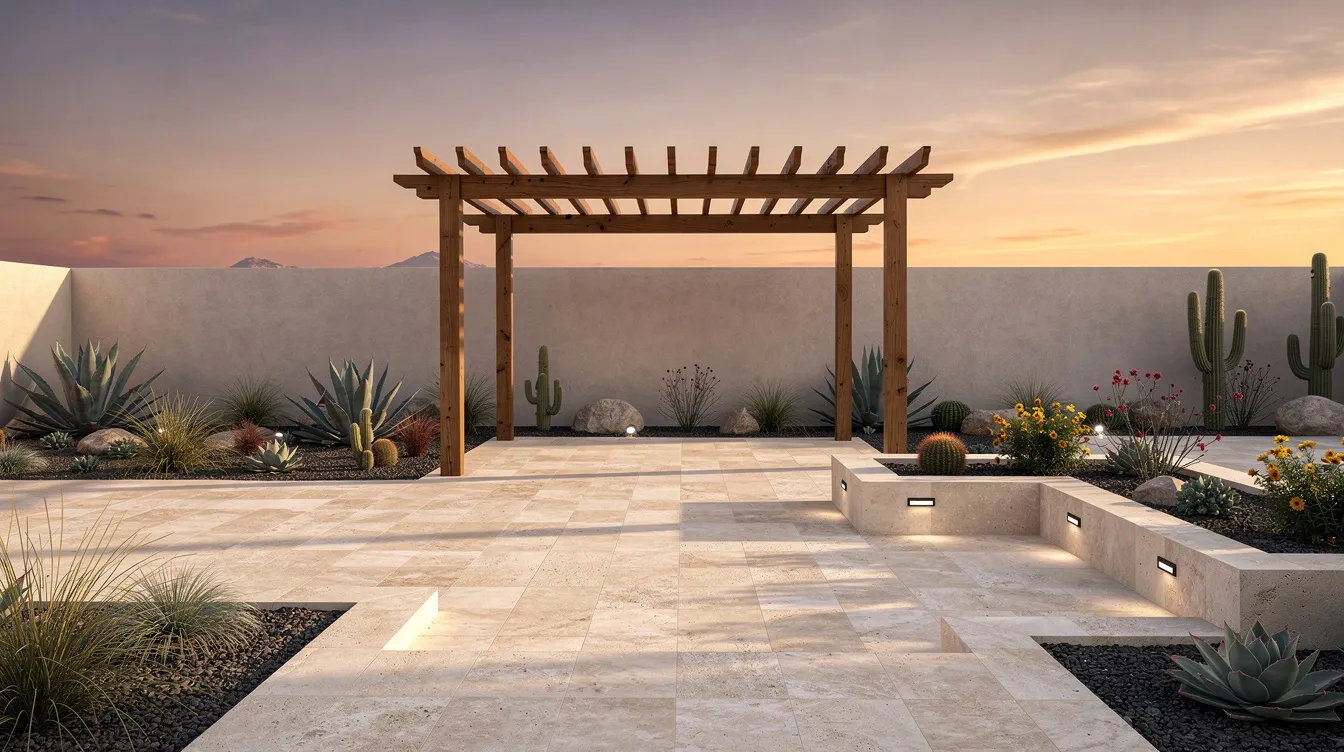
Green Valley Hardscapes uses a warm, desert-friendly color palette with strong imagery of pavers, artificial turf, and pergolas. The overall design feels clean and intentional, tailored to the Northwest Valley climate and the HOA expectations that many local homeowners navigate.
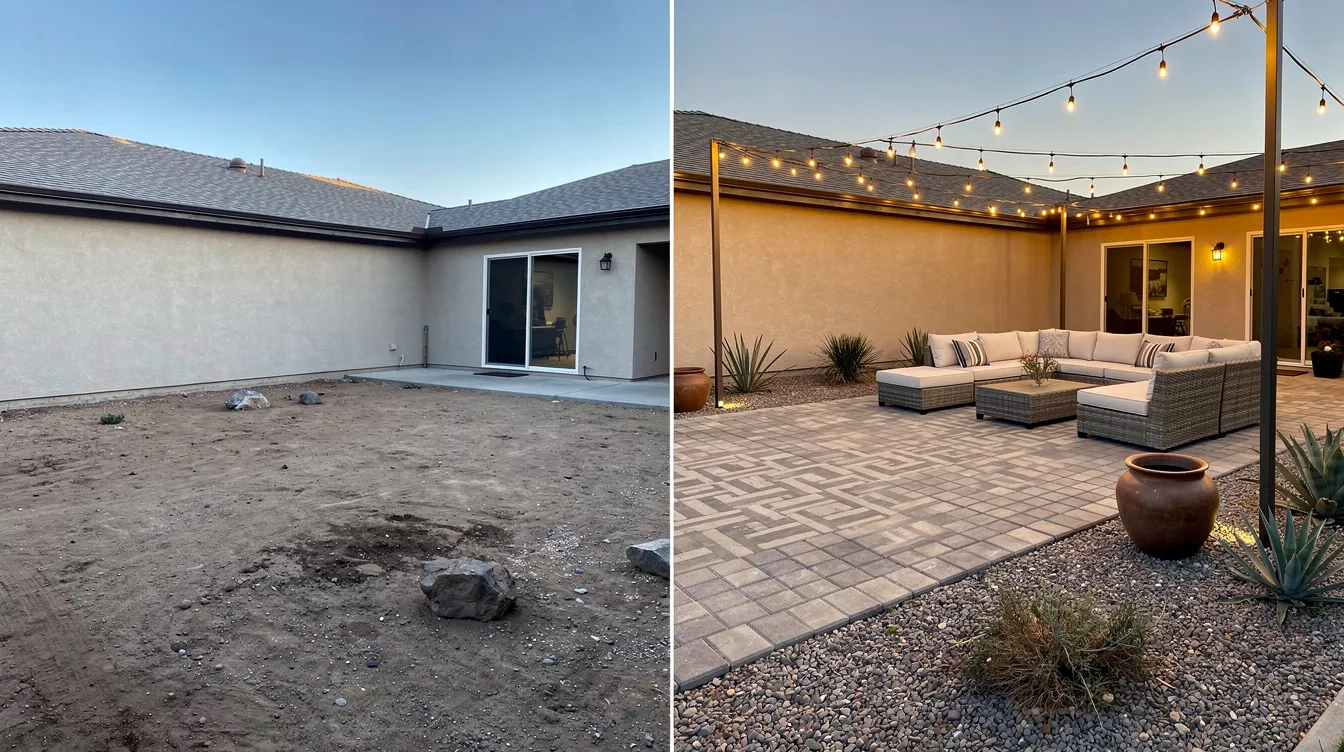
The homepage hero highlights “best-in-class outdoor living design” with before-and-after photos showing real transformations in Peoria, Glendale, and nearby communities. It immediately communicates expertise and scope without cluttering the page with unnecessary detail.
Core service pages – landscape and hardscape services like hardscape installation, pergolas and shade structures, tree services, gravel delivery, and HOA-compliant landscape design – each get their own section with photos, benefit-focused descriptions, and a clear invitation to request a quote. Testimonials pulled from google reviews and Yelp emphasize communication, job-site cleanup, and on-time completion, which are the trust factors homeowners care about most when considering a major outdoor project.
For other regional landscaping companies operating in hot climates with water restrictions and HOA regulations, Green Valley Hardscapes is a strong model of how to look aspirational while staying practical.
Yardzen: Tech-Forward Landscape Design
Yardzen’s site feels more like a modern tech brand than a traditional landscaper. It uses generous white space, strong typography, and a step-by-step visual process for remote landscape design. The simplicity of the layout keeps visitors focused on the value proposition rather than distracting them with clutter.
Their quiz-based onboarding flow – asking about property type, goals, and budget – doubles as both lead capture and customer education. By the time a visitor finishes the quiz, they already feel invested in the process. Photorealistic 3D renderings and before-and-after galleries help homeowners envision finished projects before hiring installers, which builds confidence.
Local landscapers can borrow this approach on a smaller scale. A simple “Project Planning” form that asks about yard size, budget range, and timeline achieves a similar effect – guiding potential clients through their decision while capturing qualified lead information.
BrightView: Enterprise-Level Commercial Landscaping
BrightView represents the polished, corporate end of the spectrum. Their site serves large commercial clients across multiple states, with services segmented by type (maintenance, snow and ice, water management, design-build) and by industry served.
Large project photography of campuses, resorts, and sports facilities anchors each services section. Clear navigation lets visitors from different industries find relevant case studies quickly, while resource content and sustainability reports position BrightView as thought leaders – not just service providers.
Smaller regional commercial landscapers can emulate this structure with their own “Industries We Serve” pages and a handful of detailed case studies. Even three or four well-documented commercial projects, paired with clear service categories, can project the kind of expertise that wins larger contracts.
Lawn Love & Lawn Care–Focused Websites
Lawn Love takes a conversion-first approach. The homepage leads with an instant quoting tool – enter your address, select a service, and get pricing immediately. City-specific landing pages boost local SEO, while short description copy keeps decisions easy for the visitor.
The interface limits choices to reduce friction: few options, clear pricing signals, and strong CTAs like “Book Lawn Care” and “Get an Instant Quote.” For solo lawn care operators and small teams, the lesson is clear – an obvious “Get a Free Quote” button, a short form asking for address and lawn size, and a page for recurring service packages can dramatically increase conversions.
Even without custom software, a lawn care website can use basic calculators, simple contact forms, or scheduling tools like Calendly to deliver some of the same convenience that makes Lawn Love effective.
Design-Forward Residential Landscaping Websites
High-end residential firms – think Masterplan Outdoor Living, Hess Landscape Architects, or studios in markets like san francisco – lean heavily on photography and minimalist layouts. Common patterns include full-screen hero videos of completed outdoor living spaces, clean project grids, and selective use of minimal text that communicates design philosophy without overwhelming visitors.
These sites often use a dark background on portfolio sections to make project photography pop, or they feature a featured gardens section that curates the firm’s most visually striking work into one scrollable gallery.
For landscape architects and design-build firms, the priority is clear: invest in professional photos, maintain consistent color schemes, and curate a portfolio rather than dumping every project online. Including one dedicated project page that walks through the process – from free consultation to final walkthrough – reassures homeowners undertaking large renovations that they’ll be supported at every stage.
Core Design Elements That Make Landscaping Websites Effective
The examples above share common DNA. Whether serving residential or commercial clients, the best landscaping website designs rely on the same foundational elements: visual hierarchy that guides the eye, strong photography that proves the work, clear service categorization, persuasive copy, and unmistakable calls to action.
In service businesses, the goal is never just to “look cool.” It’s to convert visitors into qualified leads who understand what the company does and where it works. Every design decision should serve that purpose.
Color, Typography, and Branding for Outdoor Services
Greens, earth tones, and muted neutrals dominate top landscaping websites for good reason – they echo the natural materials homeowners associate with outdoor spaces. A bold accent primary color (like a deep terracotta or warm red) can draw attention to calls to action without clashing with the organic feel.
|
Climate |
Suggested Palette |
|---|---|
|
Desert / Arid |
Sage green, sand, charcoal, warm terra cotta |
|
Lush / Temperate |
Forest green, soft blue, off-white, slate |
|
For body text, sans-serif fonts maximize readability on phones. Pair them with a distinctive but legible header font to add personality without sacrificing clarity. Consistent logo placement, button styles, and photo treatments across the site make the brand feel cohesive. Beautiful design isn’t about complexity – it’s about visual appeal through consistency. |
|
Photos, Videos, and Landscaping Portfolios
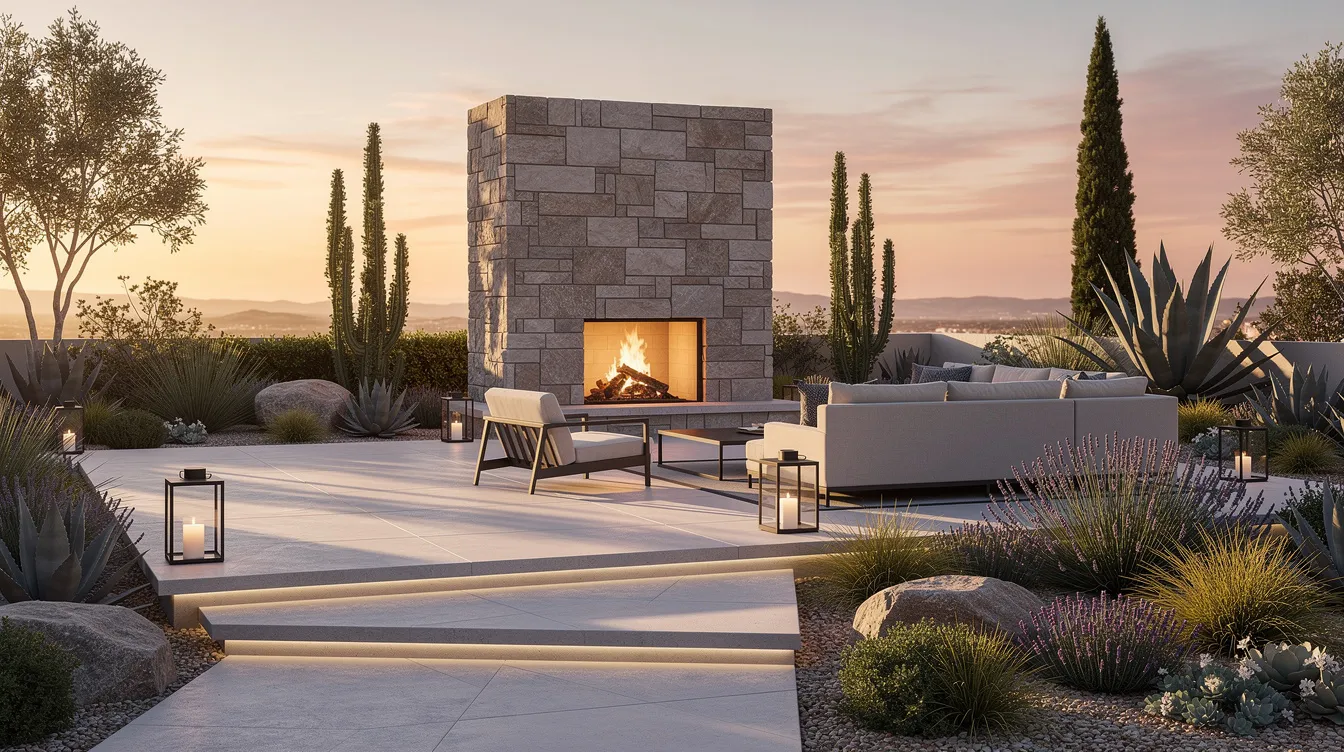
Real project photography is the single most important asset on a landscaping website. Stock photos should be avoided or minimized – especially in regions like Arizona, where a generic image of a lush green lawn undermines credibility when your actual work focuses on xeriscaping and rock features.
Strong portfolio patterns include:
-
Filterable grid layout galleries (patios, turf, planting, lighting)
-
Before-and-after sliders on the homepage or a dedicated project page
-
In-depth project galleries with materials, square footage, and timeline details
-
An image carousel for quick visual scanning
For harsh-sun regions, shoot early morning or late afternoon to avoid blown-out highlights. Showcase shade structures, water-wise plantings, and textured hardscapes. High quality images taken during golden hour consistently outperform midday shots.
Short looped hero videos or drone clips can elevate a site’s visual impact – but only if they don’t slow mobile performance. Compress and optimize every media file before uploading.
Calls to Action, Forms, and Lead Capture
CTAs should appear in three places at minimum: the hero image area (“Get a Free Estimate”), mid-page after service descriptions, and at the bottom of major pages like hardscapes, lawn care, and irrigation. Clear calls to action are non-negotiable for any site that wants to convert.
A strong quote request form for landscapers should include:
-
Service type (dropdown or checkboxes)
-
Address or ZIP code
-
Rough budget range
-
Timeframe
-
Optional photo upload
For recurring lawn care, a simplified “Book Service” form or booking tool increases conversions. Design-build firms may favor a “Schedule a Design Consultation” approach. A quote request button should always be visible – many of the top landscaping websites use a sticky header with a phone number (tap-to-call on mobile) and a quote request form link that follows the visitor as they scroll.
Site Structure: Pages Every Landscaping Website Should Include
Good navigation determines whether visitors find what they need or bounce to another landscaper. The essential pages are: Home, Services, individual service pages (hardscapes, lawn care, irrigation, tree services), Portfolio, About, Service Area, and Contact.
Companies like Green Valley Hardscapes make it immediately clear which neighborhoods, cities, and HOAs they serve. An embedded map on the service area or contact page reinforces geographic focus and helps filter out unqualified leads, saving time for both the business and the homeowner.
Designing High-Converting Service Pages
Create one core page per main service category: “Landscape Design & Installation,” “Paver Patios & Walkways,” “Artificial Turf & Putting Greens,” “Lawn Maintenance,” “Irrigation & Drainage,” and “Tree Service.” Each page should include:
-
A clear, benefit-driven intro (not generic filler)
-
A bullet-point list of what’s included in the service
-
Two to four relevant project photos from your portfolio
Add localized content where appropriate – “Xeriscape design that meets Peoria and Glendale water guidelines” or “HOA-friendly gravel and plant palettes for Surprise neighborhoods.” A small FAQ section at the bottom of major service pages addressing pricing ranges, timelines, and warranty details answers questions before the visitor ever picks up the phone, improving customer satisfaction and pre-qualifying leads.
Local SEO and Service Area Pages
City and neighborhood service area pages help landscaping websites rank for searches like “landscaper in Surprise AZ” or “Glendale pergola builder.” An ideal service area page includes an intro paragraph tailored to the city, two to three featured local projects, a list of popular service offerings in that area, and a clear call to contact.
For a company like Green Valley Hardscapes, this means separate pages for Peoria, Glendale, Surprise, and other Northwest Valley communities. The critical rule: never duplicate text across every page. Include unique details like local HOA names, neighborhood landmarks, and typical lot sizes to signal relevance to both search engines and homeowners.
Technical Features That Make Landscaping Sites Feel “Cool” (and Work Better)
Beyond looks, a website’s performance depends on responsive design, page speed, smart galleries, and functional tools. Cool animations and effects should never come at the cost of slow load times – especially for mobile visitors, who make up the majority of traffic for local service businesses.
Mobile Experience and Page Speed
A mobile responsive landscaping website should have a simple stacked layout, thumb-friendly buttons, a tap-to-call phone number, and easy-access navigation. Gallery layouts should collapse gracefully into single-column or two-column grids on phones, avoiding tiny thumbnails that are hard to tap.
Practical performance tips:
-
Compress images before uploading (target under 200KB per image)
-
Lazy-load large galleries so only visible images load first
-
Limit heavy background videos on the homepage
-
Use modern hosting or a CDN for WordPress sites
Test on real devices in both Wi-Fi and cellular conditions – desktop PageSpeed scores alone won’t catch the awkward layouts and slow pages that frustrate actual visitors.
Galleries, Booking Systems, and Integrations
Common gallery formats on top landscaping websites include filterable masonry grids, sliders, and dedicated project detail pages with multiple angles and material notes. The format you choose should match how your past clients browse – homeowners shopping for hardscapes want to see material close-ups and finished spaces, not abstract mood boards.
Online booking makes sense for weekly lawn care and recurring maintenance. For custom hardscapes and design-build projects, a “Request a Consultation” form fits better. Popular tools landscapers use in 2026 – Jobber, Service Autopilot, LMN, or even simple form builders – can be embedded cleanly into any site design without disrupting the user experience.
Platform Choices for Landscaping Website Design
Platform choice affects cost, flexibility, and how easily you can update photos, pricing, and service pages over time. For most local landscapers – like Green Valley Hardscapes in the Northwest Valley – a well-built WordPress, Wix, or Squarespace site is more than sufficient.
WordPress, Wix, and Squarespace for Landscapers
|
Platform |
Best For |
Trade-offs |
|---|---|---|
|
WordPress |
Full-service contractors needing portfolios, testimonials, blog section, and quote forms |
Requires hosting, updates, and some technical comfort |
|
Wix / Squarespace |
Solo lawn care pros or small crews who want to get online quickly |
Less flexible for complex integrations |
|
Custom Build |
Multi-location firms needing deep CRM integration and unique web design |
Higher cost and longer development time |
|
A WordPress site built with Elementor gives a full-service landscape contractor the flexibility to create detailed service pages, filterable galleries, and educational content. A Squarespace portfolio site gives a landscape architect a polished, visual-first presence with minimal setup. Either approach can produce a professional design that serves potential customers well. |
|
|
Common Landscaping Website Design Mistakes to Avoid
Even busy service businesses with great work can undermine their online presence with a few avoidable mistakes. The most common conversion killers fall into predictable categories: weak or stock imagery, unclear service areas, hard-to-find contact info, cluttered navigation, and slow galleries that frustrate mobile visitors.
Conversion-Killing Issues and Quick Fixes
Stock photos instead of real work. In a region like Arizona, a stock image of a lush Kentucky bluegrass lawn actively hurts credibility when your focus is xeriscape and hardscape. Fix: schedule a two-hour photo shoot of your three best projects.
Buried phone numbers or missing quote buttons. If a visitor has to scroll or hunt to find how to contact you, many won’t bother. Fix: add your phone number and a quote request button to the top navigation and footer on every page.
Slow-loading galleries. Uncompressed images are the most common culprit behind poor website’s performance. Fix: resize to web dimensions, compress files, and limit per-page image count to 15–20.
Vague service descriptions. Generic copy and missing city names lead to unqualified leads. Fix: rewrite service pages with specific landscaping services, location details, and the types of residential and commercial services you actually provide.
Bringing It All Together for a High-Performing Landscaping Website
The best landscaping website designs combine aesthetics (color, imagery, visual hierarchy), strategy (page structure, clear service categories, CTAs), and technology (mobile responsive layouts, fast loading, forms). Pick two or three favorite design examples from this guide and list the exact elements you want to adopt: gallery style, homepage hero layout, form placement, or color palette.
For landscapers in the Northwest Valley and similar markets, focusing on water-wise design, outdoor living structures, and HOA compliance on your website will resonate with the homeowners you’re trying to reach. Your site is a 24/7 salesperson – it’s worth investing in, updating with new project photos each quarter, and refining based on the questions your real clients actually ask.
FAQ: Cool Landscaping Websites & Online Lead Generation
These frequently asked questions address practical concerns that come up when planning, launching, or improving a landscaping website.
How many photos do I need before launching a landscaping website?
Ten to twenty strong project photos are enough to launch with confidence. Aim for a mix of front yards, backyards, hardscapes, turf, and any specialty work like pergolas or landscape lighting. If you’re just starting out, three to five polished projects are enough – you can build your portfolio over time as you complete new work and capture high quality images of each finished job.
How often should I update my landscaping website portfolio?
Revisit your portfolio quarterly to add recent projects, especially seasonal work like spring installations or fall cleanups. Regularly adding new Northwest Valley projects (or whatever your local area is) signals to both visitors and search engines that the business is active. Fresh content also gives past clients a reason to share your site when recommending you to neighbors.
Do I really need a blog on my landscaping website?
A blog section is optional but genuinely helpful for SEO and answering seasonal questions homeowners search for – topics like “Best drought-tolerant plants for Peoria AZ” or “When to overseed in Phoenix.” Aim for four to eight well-written posts per year rather than frequent low-quality updates. Focus on topics your potential clients actually ask about during consultations.
What should I prioritize if my budget is limited?
Invest first in a clean, mobile-friendly site with real photos, clear service descriptions, and obvious contact options. Advanced features – interactive quoting tools, 3D renderings, video – can come later. Use a simple builder like Wix, Squarespace, or a basic WordPress theme, and set aside some budget for a short professional photo shoot of your two or three best projects. That combination alone puts you ahead of most local competition.
How can I make my landscaping website stand out in a competitive city?
Focus on a niche or specialty – modern desert yards, pet-friendly turf, HOA-compliant designs – and showcase it prominently on the homepage and portfolio. Add hyper-local service area pages, customer testimonials from nearby neighborhoods, and one or two detailed case studies that show your process from start to finish. Specificity wins over generic claims every time.