
Key Takeaways
-
Patio pavers can transform a Phoenix-area outdoor space into a cooler, low maintenance outdoor living area.
-
Light pavers combined with artificial grass are suitable for hot Arizona weather in 2026 and feel better than plain concrete.
-
Concrete pavers, stone pavers, porcelain pavers, and brick each fit different patios, pool decks, walkways, driveways, and fire pits.
-
Design flexibility, accents borders, turf joints, and patterns add visual appeal and resale value.
-
Proper drainage, base prep, and a professional finish can make quality pavers long lasting.
Introduction: Why Patio Pavers Are Perfect for Modern Outdoor Living
Since around 2020, Arizona homeowners have moved away from plain slabs and toward patio pavers to create outdoor living spaces for dining, lounging, and poolside access. These modular paving stones are laid over compacted sand and gravel, so they offer repairability, durability, and more design flexibility than poured cement or concrete.
In Chandler, Phoenix, Gilbert, and Mesa, pavers with artificial grass strips are now a popular choice because they reduce hard surface area, soften the landscape, and help manage summer heat.
What Are Patio Pavers and Where Can You Use Them?
Patio pavers are exterior flooring units used for an outdoor patio, pool decks, walkways, garden paths, outdoor kitchens, sidewalks, fireplaces, and a practical driveway. They can be installed on a sand-and-gravel base, over sound concrete, or on pedestal systems where site conditions allow.
Pavers are commonly categorized into four main types: Concrete, Clay, Porcelain, and Permeable, each with unique characteristics suitable for various outdoor applications.
Common materials include:
-
concrete pavers and interlocking pavers for value and strength
-
natural stone such as travertine, limestone, granite, bluestone, flagstone, and cobblestone
-
porcelain pavers for a polished look
-
clay brick for classic warmth
Choosing Patio Paver Materials for Hot Arizona Weather
Material choice affects heat, slip resistance, water absorption, maintenance, and cost. In 105°F+ summers, select pavers by how the surface feels, not just how it looks.
Concrete Pavers: Versatile and Budget‑Friendly
Concrete pavers are common for patios and walkway pavers because they’re highly durable, available in many molded shapes and colors, and easy to maintain, which makes them a practical fit for high-traffic areas and outdoor features exposed to the elements.
Benefits:
-
Light tones stay more comfortable than dark concrete.
-
Interlocking options add stability for driveways.
-
Permeable styles help with managing stormwater runoff.
-
Some mixes include recycled materials.
Drawbacks:
-
Dark colors get hot under bare feet.
-
UV can fade color without sealing.
-
Surface wear may show after 10–15 years.
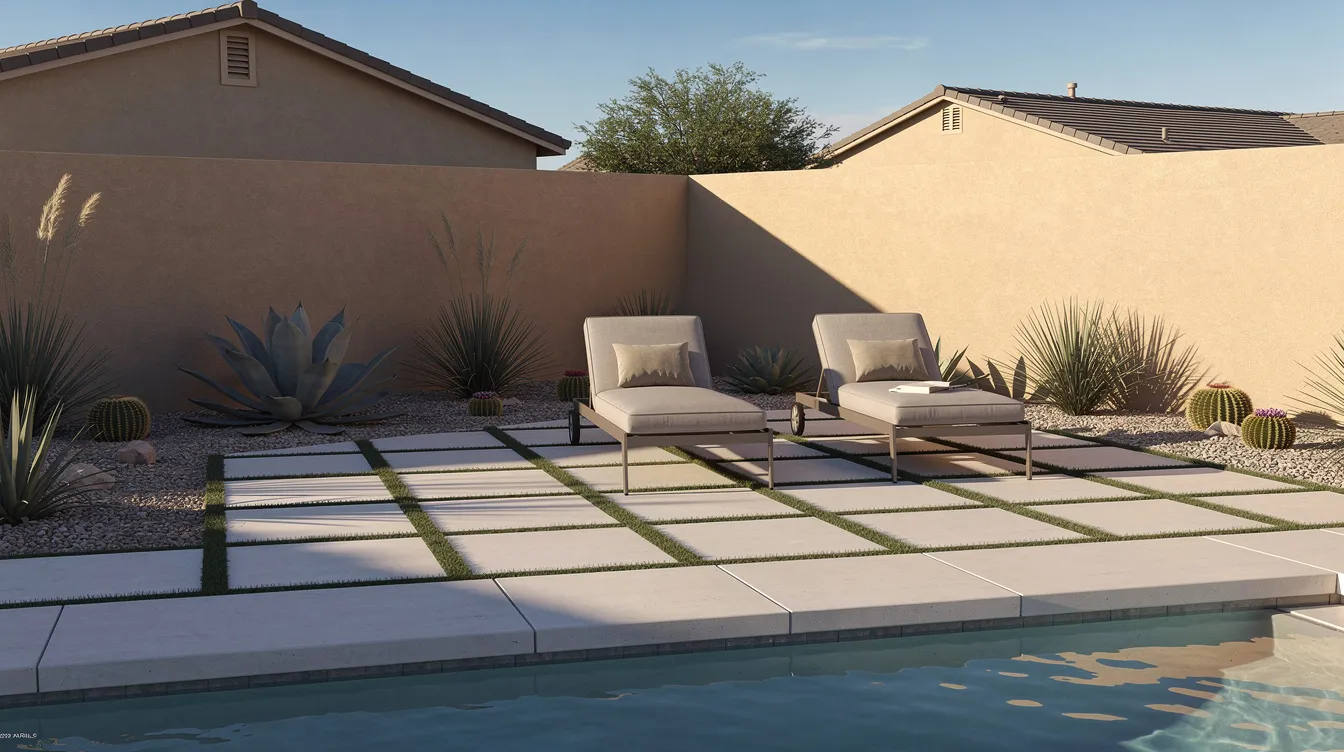
Concrete pavers pair well with artificial turf strips in grid layouts to reduce heat and water demand.
Natural Stone Pavers: Travertine, Limestone, and Other Stone Pavers
Natural stone pavers add premium style and are an excellent choice for resort-like pool decks.
-
Travertine stays relatively cool; light travertine can run about 20–30°F cooler than standard concrete in direct sun, according to Phoenix-area field comparisons from Signature Landscape.
-
Limestone offers earthy tones, solid durability, and a natural look.
-
Stone provides unique veining and high-end visual appeal.
-
Seal most stone every 1–3 years near pools to resist chlorine, oils, and staining.
The trade-off is higher cost and more sensitivity to harsh cleaners.
Porcelain Pavers: Ultra Low‑Maintenance Modern Look
Porcelain pavers are dense, kiln-fired outdoor tiles with very low water absorption, often 0.5% or less. That makes them low maintenance and resistant to stains, fading, dust storms, and efflorescence.
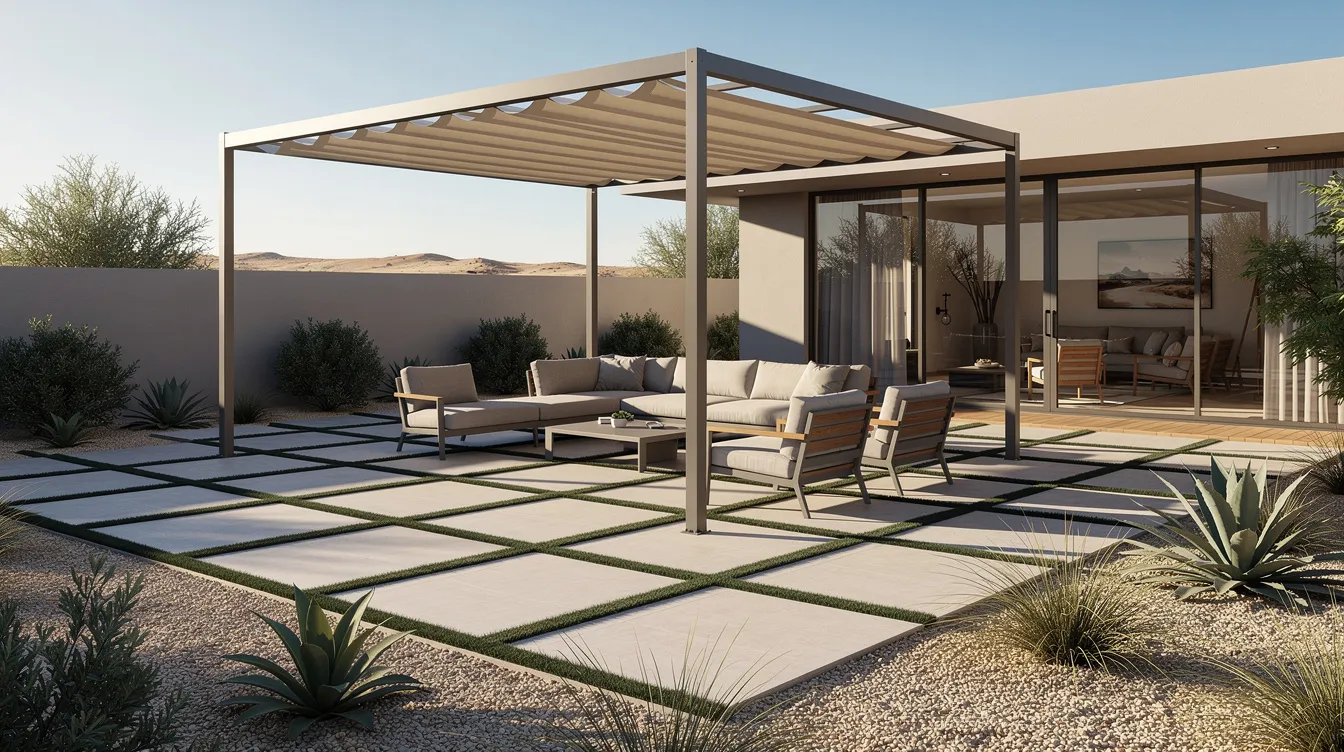
They suit contemporary outdoor areas, rooftop terraces, and modern aesthetic yards. Light porcelain with artificial grass accents creates a clean but softer outdoor design.
Limitations:
-
Not always suitable for heavy vehicle use unless specified.
-
The base must be very flat.
-
A professional installer is strongly recommended.
Brick and Clay Pavers: Classic Warmth
Brick pavers are kiln-fired clay units used in courtyards, side yards, and older Phoenix neighborhoods.
They offer baked-in color, slip-resistant textures, and compatibility with stone, wood, and adobe-style walls. Dark brick can become hot, so use it in shade or mix it with lighter pavers and artificial grass borders. Maintenance is simple: clean, refill joints, and replace damaged units when needed, and quality landscape and hardscape services can help keep these outdoor features looking and performing their best.
Designing a Patio Paver Layout That Fits Your Outdoor Space
The right layout helps homeowners create zones for outdoor living, dining, fire, and pool access. Good design makes even compact backyards feel intentional.
Popular Patterns and Layouts
-
Herringbone, basket weave, and running bond add movement and strength.
-
Large square or rectangular pavers fit minimalist patios.
-
Linear patterns make Arizona side yards feel longer.
-
Align patterns with doors, windows, and furniture paths.
Mixing Paver Types and Materials
-
Mixing concrete pavers with natural stone or porcelain can define zones without making the project busy.
-
Use neutral pavers as the main field, then add travertine, brick, or flagstone around fire pits, outdoor kitchens, or seating areas.
-
Keep the palette to two or three tones. Desert sunlight makes too many materials look cluttered.
Borders, Accents, and Transitions
-
Borders frame patios, steps, and entries.
-
Darker borders around light fields hide dust and define movement from pool decks to walkways.
-
Accent insets can anchor dining tables, pergolas, fireplaces, or a fire bowl.
-
Transitions should feel natural and safe, especially near doors and landscape beds.
Integrating Artificial Grass with Patio Pavers
Combining patio pavers with artificial grass is a go-to Phoenix solution for heat, water savings, and visual softness.
-
Checkerboard and grid designs alternate pavers with turf.
-
Use heat-resistant turf infill and light pavers.
-
Turf strips reduce hardscape and help with stormwater runoff.
-
The base still needs proper drainage to prevent water pooling.
Add solar-powered or LED lights along walkways or patio edges to improve safety, create a warm evening ambiance, and open up endless design options.
For local landscapers, Digital Vibes Agency can turn these projects into photo galleries, virtual mockups, and lead-generating ads.
Planning and Installing Patio Pavers: DIY vs. Professional Help
A durable outdoor project starts before you install the first paver. Plan grade, drainage, materials, and permission from your HOA when required.
Site Evaluation, Drainage, and Layout
Before excavation, check sun exposure, irrigation, boundaries, door thresholds, and utility access. Add a slight slope of about 1–2% away from the house to prevent water pooling after monsoon storms.
Mark furniture, grill space, and walking routes first. It is cheaper to adjust paint lines than reset finished pavers.
Base Preparation and Setting Pavers
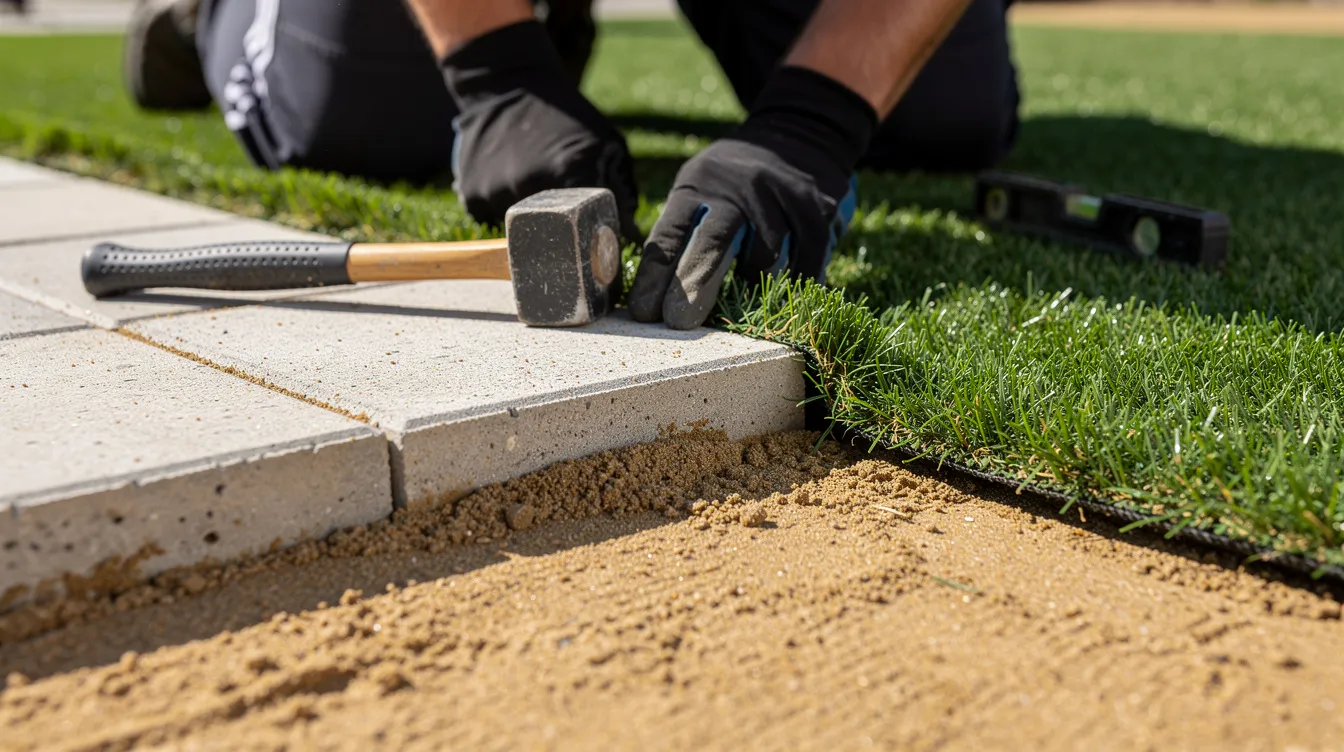
Basic layers include excavated soil, compacted gravel, bedding sand, pavers, and joint sand or polymeric material.
Compaction matters in Phoenix clay, sandy soil, and caliche. Poor base prep causes sinking edges, uneven flooring, and trip hazards. For turf inlays, the turf and paver bases must drain together.
When to Hire a Professional Installer
Hire a professional for patios over 300–400 square feet, driveways, pool remodels, challenging slopes, or raised edges.
Look for crews with Chandler, Gilbert, or Mesa projects from 2022–2026. They should understand codes, grading, edge restraints, and warranties. If you run a hardscaping company, Digital Vibes Agency can create SEO case studies from before-and-after work.
Maintenance and Longevity: Keeping Your Patio Pavers Looking New
Quality pavers can last 25–30 years or more with basic maintenance. The big benefit over concrete slabs is that individual pieces can be lifted, reset, or replaced.
Routine Cleaning and Weed Control
Sweep or blow desert dust, leaves, and debris. Rinse with mild detergent. Avoid acidic cleaners on natural stone.
Polymeric sand helps block weeds and ants but may need topping up after pressure washing or heavy storms. Artificial grass between pavers should be brushed so fibers stand upright.
Sealing, Stain Protection, and Color Preservation
Seal concrete pavers and most natural stone every 2–4 years in Arizona. Porcelain usually does not need sealing, but joints may.
Clean grease, fertilizer, food, and pool chemical spills quickly. Choose light, UV-resistant colors for comfort and color retention.
Repairing and Re‑leveling Pavers Over Time
To repair settling, lift the affected units, adjust base sand, compact, and relay pavers flush. Keep extra attic stock from the original project so replacements match.
Working with Digital Vibes Agency to Market Your Patio Paver Services
Digital Vibes Agency is a Chandler-based digital marketing partner for hardscaping, landscaping, and pool renovation companies.
We help businesses promote patio pavers and artificial grass through:
-
SEO pages like “Patio Pavers & Artificial Turf in Chandler, AZ”
-
PPC campaigns and social videos
-
project photography for concrete pavers, stone pavers, and porcelain pavers
-
analytics that track calls, forms, and quote requests
-
seasonal campaigns for spring patios and fall fire pits
We also fix website issues such as slow server response, broken http links, and weak local landing pages that limit lead flow.
FAQ: Patio Pavers for Arizona Homes
How do patio pavers compare to stamped concrete in Arizona heat?
Pavers handle thermal movement better than large stamped concrete slabs and are easier to repair. Both can get hot, but light travertine, light concrete pavers, shade, and artificial grass strips usually feel cooler than dark stamped concrete.
Can I install patio pavers directly over my existing concrete slab?
Often, yes. Thin pavers or porcelain can go over sound concrete if the slab is stable, has no major movement, and slopes correctly. Door clearance and drainage must be checked first.
Are patio pavers safe and practical around pool decks in Phoenix?
Yes. Textured concrete, travertine, and slip-rated porcelain pavers are widely used around pools. Avoid glossy finishes, maintain proper drainage, and clean chlorine or salt residue regularly.
Does combining pavers with artificial grass require special drainage?
Yes. The paver base and turf base need free-draining aggregate, perforated turf backing, and the right infill so monsoon water does not pond or create odors.
How long will a well‑installed paver patio last in Arizona?
With quality materials, proper base prep, and routine care, paver patios can last 25–30 years or more. Joint refilling, sealing where needed, and quick re-leveling will enhance appearance and usable life.